You Used to Be Able to Walk In, Shake a Hand, and Start Building a Life

Photo: James St. John, CC BY 2.0, via Wikimedia Commons
The story goes like this: a seventeen-year-old kid, no college plans, not much of a transcript, walks into the employment office of a manufacturing plant on a Tuesday morning. He fills out a one-page form. Someone shakes his hand, looks him over, and tells him to be there Monday at seven. By the end of his first year, he's learned a skill. By his fifth, he's earning enough to rent an apartment. By his fifteenth, he's a foreman.
That story isn't fiction. For a significant portion of the twentieth century, it was just how things worked in America. The entry point to a real career was often nothing more than physical presence and a willingness to start at the bottom.
Today, that entry point has been buried under layers of process, credential requirements, and digital gatekeeping that would have seemed absurd — and frankly insulting — to the generation that built this country's industrial backbone.
When Showing Up Was Enough
From roughly the 1940s through the early 1980s, the American labor market offered something genuinely remarkable: accessible entry points into careers that actually went somewhere. Manufacturing jobs, in particular, were structured around the assumption that workers would arrive without specialized skills and acquire them on the job. Apprenticeships in the trades — plumbing, electrical work, carpentry, ironwork — operated on a similar logic. You started as a helper, you learned by doing, and over time you became someone whose knowledge had real market value.
Retail was similar. Department stores, hardware chains, and grocery operations hired young people off the street and developed them internally. A kid who started stocking shelves at sixteen might be managing a department by twenty-three and running a store by thirty. The investment was mutual: the employer trained you, and you gave them your productive years in return.
None of this required a resume. The concept of a resume as a prerequisite for entry-level work was largely foreign to the American labor market before the 1980s. You showed up. You spoke to a person. That person made a judgment call. The whole process might take forty-five minutes.
The Credentialing Creep That Changed the Calculus
The transformation happened gradually, driven by several forces converging at once.
The automation of manufacturing through the 1980s and 1990s eliminated millions of the unskilled and semi-skilled positions that had served as the traditional first rung of the career ladder. The jobs that remained increasingly required technical proficiency that couldn't be acquired in an afternoon. Simultaneously, the expansion of higher education — and the cultural messaging that accompanied it — reframed the four-year college degree as the baseline credential for any job worth having.
What followed was a phenomenon economists call credential inflation: the steady upward drift in the minimum qualifications required for jobs that hadn't actually become more complex. Positions that once required a high school diploma began requiring associate's degrees. Jobs that once required associate's degrees began requiring bachelor's degrees. The work itself hadn't changed. The gatekeeping had.
By the 2000s, this dynamic had metastasized into the hiring process itself. Online application systems, behavioral screening tools, background checks, credit history reviews, and pre-employment skills assessments became standard practice even for jobs that involved stocking shelves or operating a forklift. A 2021 Harvard Business School study estimated that roughly six million middle-skill American workers were being systematically screened out of jobs they were entirely capable of performing by automated hiring filters that had been calibrated for credentials rather than capability.
 Photo: Harvard Business School, via wallpaperaccess.com
What the Closed Door Actually Costs
The economic consequences of this shift are not abstract. They show up in the data on intergenerational mobility — the ability of a child born into a working-class family to earn more than their parents did.
In the 1950s and 1960s, the United States had among the highest rates of economic mobility in the developed world. The accessible career ladder was a significant reason why. A young man or woman without financial resources or family connections could enter the labor market at the bottom and, through skill acquisition and time, work their way into the middle class. The ladder was real, and it was climbable.
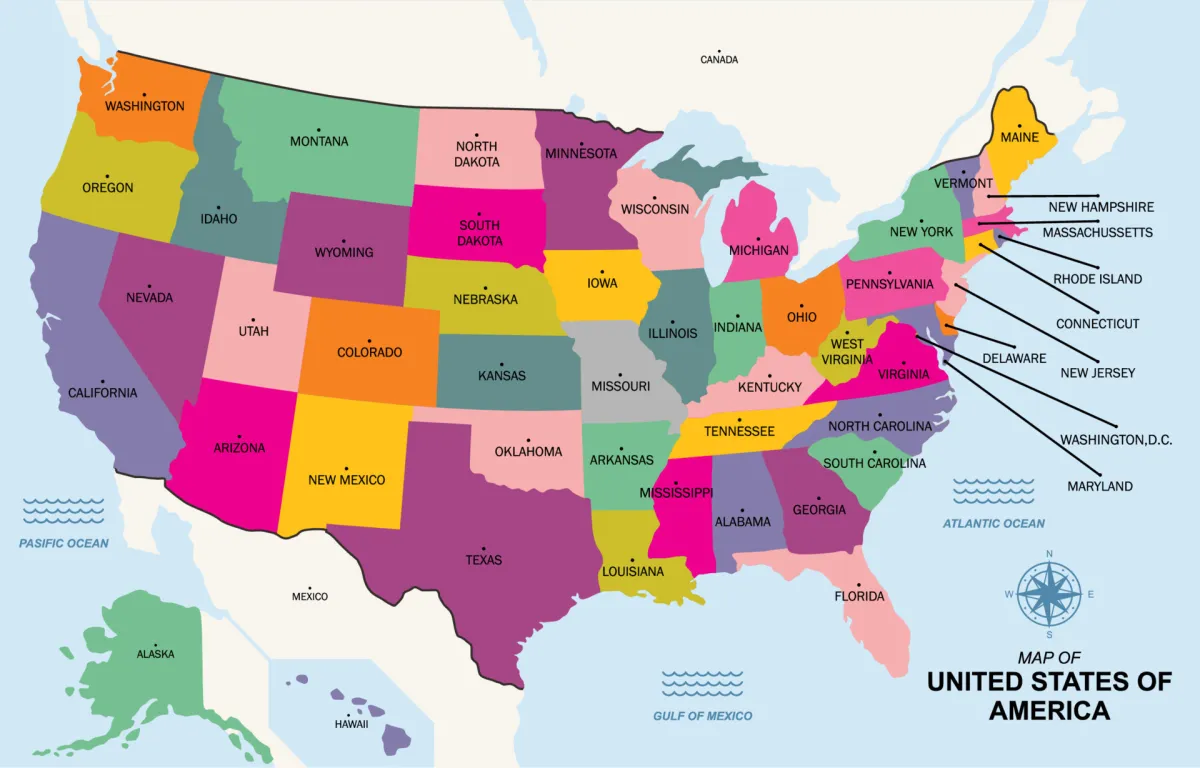 Photo: United States, via static.vecteezy.com
Today, the United States ranks near the bottom of developed nations on measures of intergenerational economic mobility. The accessible entry point — the job you could walk into with nothing but willingness — has largely disappeared, and with it, the most democratic mechanism the American economy ever produced for moving people upward.
The Work Ethic That Needed a Chance to Prove Itself
There's a cultural dimension to this that gets less attention than the economic one, but it matters just as much.
The old system, for all its imperfections, operated on a fundamental assumption about human potential: that most people, given access and opportunity, would demonstrate their value through performance. The judgment about whether someone was worth hiring was made after they had a chance to show what they could do, not before they ever walked through the door.
The modern hiring process inverts that logic almost completely. Automated systems make eliminating decisions before any human judgment is applied. The filter runs before the conversation happens. And what gets filtered out, consistently, is the person who has everything except the paperwork.
That's not just an economic inefficiency, though it is that. It's a statement about who gets a chance in America — and the statement it's making now is considerably narrower than the one the country used to make.
The Door That Used to Be Open
The warehouse job that requires an online application, a background screen, a drug test, and a skills assessment before your first shift isn't necessarily a worse job than the one your grandfather walked into off the street in 1962. But the path to it is categorically different, and the people it excludes are often exactly the people who most need a first chance.
The handshake hire wasn't a naive system. It was a system built on a specific kind of faith — that work itself was the proof, and that the proof should come before the judgment. Somewhere along the way, America stopped believing that. The cost of that lost faith is still being counted.