A Full Tank for a Dollar: The Rise and Fall of America's Love Affair with the Open Road
A Full Tank for a Dollar: The Rise and Fall of America's Love Affair with the Open Road
Somewhere between the postwar boom and the invention of the traffic app, America lost something it didn't even notice slipping away. The open road — once a symbol of pure, uncomplicated freedom — has become a source of financial stress, gridlock anxiety, and environmental guilt. To understand how we got here, you have to go back to a time when gas cost less than a candy bar and driving on a Sunday afternoon wasn't an errand. It was the whole point.
When the Highway Was a Playground
In 1955, the average price of a gallon of regular gasoline in the United States was around $0.29. By the mid-1960s, it had crept up to roughly $0.31 to $0.35 — still less than a third of a dollar. For a family with a full-sized American sedan, filling the tank from empty might cost you $4 or $5. That's not adjusted for inflation as a rhetorical trick — that was the literal price on the pump.
And Americans drove. Constantly. Joyfully. For no particular reason.
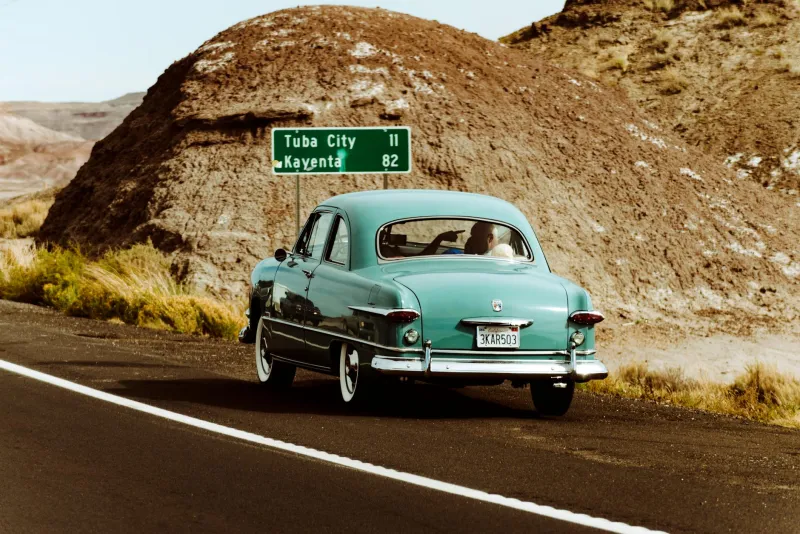
The postwar economic surge had handed millions of middle-class families their first car, often a gleaming, chrome-heavy Detroit creation with tail fins and a radio. The Interstate Highway System, launched under President Eisenhower in 1956, was unfurling fresh asphalt across the country. Suburbs were blooming outward from every major city. The car wasn't just transportation — it was identity, status, and leisure all wrapped in sheet metal.
The "Sunday drive" became a genuine American tradition. Families would pile into the car after church with no destination in mind, windows down, just moving through the landscape because the act of driving itself felt like a luxury. Drive-in theaters, roadside diners, and motor lodges catered entirely to this culture of recreational mobility. The road wasn't something you had to endure — it was something you looked forward to.
The Numbers That Tell the Story
Car ownership rates climbed steeply through the postwar decades. In 1950, there were roughly 49 million registered vehicles in the United States. By 1970, that number had more than doubled to over 108 million. America wasn't just buying cars — it was reorganizing its entire physical landscape around them. Cities built parking lots where neighborhoods once stood. Highways cut through communities. The car became the assumed center of everyday life.
For context, the median household income in 1960 was around $5,600 per year. A brand-new Chevrolet Impala — one of the most popular cars in the country — retailed for about $2,590. That's roughly five months of gross income for a moderately priced family car. Today, the median household income sits around $74,000, and the average new car transaction price has climbed past $48,000. That's nearly eight months of income, and that's before you factor in insurance, registration, or the $3.50 to $4.00 per gallon you'll be paying at the pump.
Something fundamental has shifted.
The 1973 Moment That Changed Everything
The first real crack in the romance appeared in October 1973, when OPEC imposed an oil embargo on the United States in response to American support for Israel during the Yom Kippur War. Almost overnight, gas prices spiked and lines at service stations stretched around the block. Americans who had never thought twice about fuel suddenly found themselves rationed, waiting, and rethinking.
Gas prices stabilized and dipped again in the late 1970s before another shock hit in 1979. But the psychological damage was done. The idea that cheap gas was a permanent feature of American life — rather than a fortunate accident of postwar geopolitics — had been cracked open. The carefree tank-up was no longer guaranteed.
By the 2000s, fuel prices had become a genuine household budget line. The 2008 spike, which pushed gas past $4 per gallon nationally for the first time, felt like a breaking point. Suddenly, the SUV that had seemed like a sensible family vehicle became a rolling liability.
Driving in the Modern Age
Today, the relationship between Americans and their cars is complicated in ways that 1960s families wouldn't recognize. Yes, car ownership remains high — the U.S. still has more vehicles than licensed drivers — but the emotional texture of driving has changed almost completely.
Urban commuters spend an average of 54 hours a year stuck in traffic, according to pre-pandemic data from the Texas A&M Transportation Institute. The Sunday drive has largely been replaced by the Sunday errand run. Ride-sharing apps like Uber and Lyft have convinced millions of city dwellers that car ownership is optional, even burdensome. And electric vehicles — while still a small fraction of the overall fleet — represent a philosophical departure from the roaring V8 culture that defined the golden age of American driving.
Among younger Americans, the cultural signal that a car once sent has faded. Owning a car in a major city is increasingly seen not as freedom, but as a financial drain competing with rent, student loans, and the cost of living that has quietly consumed the breathing room their grandparents took for granted.
What the Road Used to Mean
There's a reason so much of the great American literature and music of the 20th century is set in a moving car. Kerouac's On the Road, Route 66, Bruce Springsteen's "Born to Run" — the highway represented possibility, escape, and the peculiarly American belief that you could always start fresh somewhere else if you just kept driving.
That mythology hasn't entirely disappeared, but it's been weathered. The open road now comes with a gas price notification, a navigation app rerouting you around congestion, and the low hum of anxiety about what the car payment is doing to your monthly budget.
The freedom is still out there, technically. It just costs a lot more than $0.35 to find it.