The Golden Handcuff: How America Broke Its Promise to Let Workers Actually Retire

In 1978, Gerald Morrison walked out of the General Motors plant in Flint, Michigan for the last time. He was 62 years old, had worked the assembly line for 30 years, and was about to receive something that seems almost mythical today: a guaranteed monthly paycheck for the rest of his life. No stock market gambles, no investment decisions, no sleepless nights wondering if his money would last. Just a pension check, every month, until he died.
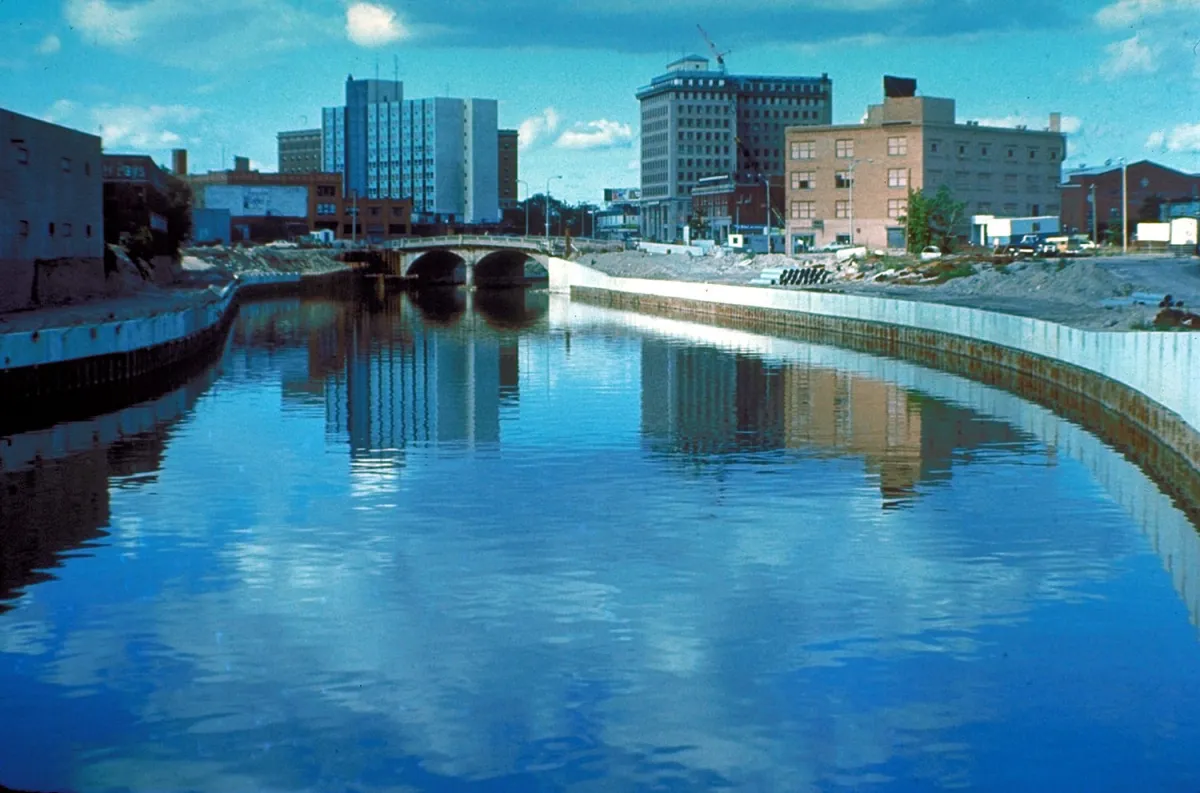 Photo: Flint, Michigan, via static3.businessinsider.com
 Photo: General Motors, via nypost.com
Today, Morrison's grandson Jake faces a radically different reality. At 35, he's already behind on retirement savings, managing a 401(k) that lost 20% of its value in the last market downturn, and calculating that he'll need to work until he's 70—maybe longer—to afford anything resembling his grandfather's retirement.
When Retirement Was a Reward, Not a Risk
For most of the 20th century, the American retirement system operated on a simple promise: work hard for 30 years, and your employer would take care of you afterward. Defined-benefit pensions were the norm across corporate America, from factory floors to executive suites. Companies hired actuaries, managed investment risk, and guaranteed specific monthly payments based on years of service and final salary.
The math was straightforward. A typical pension might pay 1.5% of your final salary for each year worked. Put in 30 years, and you'd retire with 45% of your final pay—for life. Combined with Social Security, most middle-class Americans could maintain their standard of living without ever thinking about asset allocation or market volatility.
"My dad never owned a single stock," says Patricia Chen, whose father retired from IBM in 1985 with full pension benefits. "He didn't need to. The company promised to pay him $2,800 a month until he died, and they did. He lived comfortably for 20 years on that money."
This system created genuine retirement security for millions. Workers could plan their futures with confidence, knowing exactly what their retirement income would be. The risk of market downturns, inflation, or living longer than expected fell on employers and their professional money managers, not individual workers.
The Great Pension Exodus
The shift began quietly in the early 1980s. Companies discovered they could save money by eliminating guaranteed pensions and offering 401(k) plans instead. What started as a supplement to traditional pensions gradually became a replacement.
By 2020, only 15% of private-sector workers had access to defined-benefit pensions, compared to 60% in 1980. Meanwhile, 401(k) participation hovered around 80% for eligible workers—but eligibility itself became the catch. Many employers offer no retirement benefits at all, leaving workers entirely on their own.
The transition wasn't just about corporate cost-cutting. It represented a fundamental philosophical shift in American capitalism: from shared responsibility to individual risk. Companies no longer promised to take care of loyal employees. Instead, they offered tools and tax advantages, then wished workers luck navigating the complexities of retirement planning alone.
The DIY Retirement Disaster
The results have been catastrophic for retirement security. The Federal Reserve's 2022 Survey of Consumer Finances revealed that the median 401(k) balance for workers aged 55-64 was just $185,000—enough to generate roughly $7,400 annually in retirement income using the standard 4% withdrawal rule.
Compare that to the pension Gerald Morrison received in 1978, which would equal about $4,200 monthly in today's dollars—$50,400 annually. Morrison's guaranteed pension provided seven times more income than today's typical 401(k) balance can safely generate.
The problem isn't just inadequate savings—it's the complexity of managing retirement funds. Today's workers must become amateur investment advisors, making decisions about asset allocation, rebalancing, and withdrawal rates that can make or break their financial futures. One bad decision, one market crash at the wrong time, and decades of careful saving can evaporate.
"We've essentially told every American worker to become their own pension fund manager," explains retirement researcher Dr. Teresa Ghilarducci. "But we haven't given them the training, tools, or resources that professional fund managers have. It's like asking someone to perform surgery after watching a YouTube video."
The Timing Trap
Perhaps the cruelest aspect of 401(k) retirement is sequence-of-returns risk—the danger that market crashes will occur just when you need your money most. Workers who retired in 2008 saw their 401(k) balances decimated right when they began withdrawing funds, permanently reducing their lifetime income.
Pension recipients faced no such risk. Whether the stock market soared or crashed, their monthly checks arrived on schedule. The timing of their retirement relative to market cycles was irrelevant because professional fund managers handled the complexity of generating steady income from volatile investments.
This protection was especially valuable for working-class Americans who lacked the financial sophistication to navigate market volatility. A factory worker in 1975 could retire with dignity and security without ever understanding the difference between stocks and bonds. Today, that same worker needs to master concepts that challenge MBA students.
The Inequality Engine
The pension-to-401(k) shift has also dramatically increased retirement inequality. Under the old system, pension formulas ensured that rank-and-file workers received retirement benefits roughly proportional to their earnings. Everyone got the same 1.5% per year of service, whether they were janitors or executives.
401(k) plans work differently. High earners can afford to contribute the maximum amounts, receive larger employer matches, and hire financial advisors to optimize their investments. Low-wage workers often can't afford to contribute at all, missing out on employer matches and decades of compound growth.
The result: retirement inequality has exploded. Today's executives retire with millions in 401(k) accounts while their former employees work into their 70s because they can't afford to stop.
What We Lost Along the Way
Beyond the financial implications, the death of pensions eliminated something more intangible: the promise that loyalty and hard work would be rewarded with security. The old system reinforced the social contract between employers and employees, creating incentives for workers to stay with companies and for companies to invest in their workforce.
Today's portable 401(k) system theoretically offers more flexibility, but it's also contributed to the erosion of workplace loyalty and long-term thinking. Why should companies invest heavily in employee development if workers might leave next year? Why should workers feel committed to employers who offer no long-term security?
The pension era represented more than just a different retirement funding mechanism—it embodied a different vision of American capitalism, one where prosperity was shared and security was earned through faithful service. That vision may be gone forever, but its memory serves as a reminder of what we've traded away in our rush toward individual responsibility and market-based solutions.
For Gerald Morrison's grandson Jake, retirement isn't a reward waiting at the end of a long career—it's a financial puzzle he'll spend the next 30 years trying to solve, hoping the markets cooperate and his calculations prove correct. It's a fundamentally different and far less secure way to end a working life.