When the Grocery Store Was Simple: The Paradox of Choosing From 50,000 Products
When the Grocery Store Was Simple: The Paradox of Choosing From 50,000 Products
Walk into a supermarket in 1975 and you'll notice something immediately: the place is comprehensible. You know where everything is. The cereal aisle has maybe a dozen options. Bread is bread. Milk comes in whole, 2%, or skim. Peanut butter is creamy or chunky. The store itself is smaller—maybe 40,000 square feet—and you can navigate it in thirty minutes, tops.
A typical supermarket carried about 9,000 unique products. You could reasonably examine most of them in a single shopping trip. The selection was limited, but that limitation was also liberating. You didn't spend twenty minutes comparing seventeen varieties of yogurt because yogurt came in maybe three options: plain, fruit, or not available.
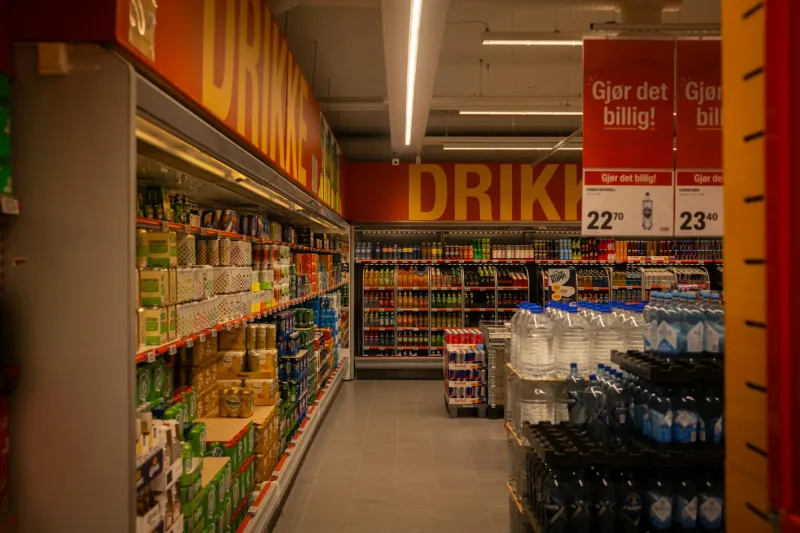
Now enter a modern supermarket. You're confronted with 50,000 products spread across 60,000 square feet. The cereal aisle alone contains 300+ varieties. Peanut butter? There are 75 options, ranging from conventional to natural to organic to almond-based to peanut-free alternatives. Milk comes in at least a dozen varieties: whole, 2%, 1%, skim, lactose-free, organic, grass-fed, ultra-filtered, plant-based alternatives (almond, oat, soy, coconut, cashew, macadamia), and more.
You came to buy milk. Now you're standing in front of a wall of options, and the simple act of choosing has become a decision tree requiring value judgments about health, ethics, sustainability, and personal preference.
The Explosion of Choice
This expansion happened gradually, then suddenly. In the 1950s and 1960s, supermarkets began expanding their selection. By the 1970s, they'd settled into a stable equilibrium: enough variety to meet most customer needs, but not so much that shopping became paralyzing.
The real acceleration came in the 1990s and 2000s. Supermarkets discovered that they could differentiate themselves through selection. Stores began expanding organic sections, ethnic foods, health-conscious options, and specialty items. What started as a modest expansion became a full-scale arms race.
Today's supermarket isn't primarily designed to serve your basic nutritional needs. It's designed to serve every conceivable dietary preference, ethical commitment, and lifestyle choice. Vegan? There are 200 products for you. Keto? The store has dedicated sections. Gluten-free? Aisles of options. Organic? Non-GMO? Fair trade? Locally sourced? All available, often overlapping.
The numbers are staggering. The average supermarket now stocks 50,000-70,000 different items. Some mega-supermarkets exceed 100,000. By contrast, Trader Joe's—which positions itself as a simplified shopping experience—carries about 4,000 products. And customers love it, partly because the limitation is actually a relief.
The Decision-Making Burden
Psychologists have a term for what happens when you're confronted with too many choices: decision fatigue. The phenomenon is well-documented. When faced with too many options, people experience analysis paralysis, reduced satisfaction with their choices, and a greater likelihood of defaulting to familiar options.
A famous study examined jam selection in a supermarket. When researchers offered a display of six jam varieties, 30% of customers purchased something. When they expanded the display to 24 varieties, only 3% purchased. The abundance of choice actually reduced purchasing.
Applied to the modern supermarket, this creates a strange paradox. You have five times as many choices as your parents did, yet you're probably buying roughly the same things they did. You walk past hundreds of options and reach for the brands you've always bought, the products you've always known. The expanded selection doesn't broaden your actual consumption; it just makes the shopping experience more cognitively demanding.
Consider the time investment. A 1975 shopping trip took about 30-40 minutes. You moved methodically through the store, found what you needed, checked out, and left. Modern grocery shopping? Studies suggest the average is now 45-60 minutes, despite the fact that most people buy roughly the same number of items (20-30 products per trip).
Where does the extra time go? Decision-making. Comparing labels. Evaluating options. Worrying about whether you're making the right choice. The expanded selection has made shopping slower and more stressful, not faster and easier.
The Illusion of Choice
Here's another paradox: despite 50,000 products on the shelves, the actual diversity of offerings has decreased in some ways.
In the 1970s, supermarkets carried regional brands alongside national brands. You might find three different local dairies, regional bakeries, small-scale producers. The shelves reflected actual diversity of production.
Today, the supermarket is dominated by a handful of mega-corporations. The 50,000 products are mostly different formulations and marketing variations of products made by the same dozen companies. Nestlé alone owns hundreds of brands across every category. Coca-Cola Company owns dozens of beverage brands that appear to be competitors. Kraft Heinz dominates shelf space with dozens of variations on the same underlying products.
So you have the illusion of choice—fifty varieties of pasta sauce—but limited actual competition. The brands you're choosing between are often owned by the same parent company. The choice architecture is designed to feel diverse while actually being consolidated.
The Rise of Convenience and Overwhelm
The expansion of supermarket selection coincided with another shift: the rise of online grocery shopping and delivery services. Amazon Fresh, Instacart, Walmart+, and countless regional services now promise to bring 50,000 products to your door without requiring you to visit a physical store.
In one sense, this is genuinely convenient. You don't have to navigate the overwhelming supermarket. You can order online, and someone else will select your items.
But in another sense, it represents the ultimate expression of the problem. Instead of shopping being a discrete, contained activity, it's become something you can do at midnight, while scrolling on your phone, without any temporal or spatial boundaries. You can spend unlimited time browsing, comparing, and deliberating—because there's no checkout line waiting behind you, no social pressure to move along.
The convenience of delivery has paradoxically increased decision-making burden by removing the temporal constraints that once bounded the shopping experience.
What We Lost
In 1975, grocery shopping was a routine errand. You went to the store, you bought what you needed, you came home. The experience was largely frictionless because the decision set was manageable.
Your mother or grandmother knew the store well. She had her route. She knew which brands were good, which were cheap, which were worth the extra cost. The limitations of selection meant that she could develop genuine expertise about the products available.
There was also a kind of equality to it. Everyone was shopping from the same selection. A wealthy family and a working-class family bought from the same shelves. The differences were in quantity, not in kind.
What We Gained
Today's supermarket offers genuine abundance. If you have specific dietary needs, ethical commitments, or health concerns, you can find products that reflect those values. A person with celiac disease has dozens of options. A vegan has entire aisles. Someone seeking organic, fair-trade, sustainably sourced products can find them.
This is real progress. The 1975 supermarket was simpler, but it was also more exclusionary. If you had dietary restrictions, you often couldn't find suitable products. If you cared about where your food came from, you had limited options. The modern supermarket, for all its complexity, offers genuine accommodation for diverse needs and values.
The Unresolved Tension
What we haven't figured out is how to preserve the genuine benefits of expanded selection while avoiding the decision fatigue and cognitive burden that comes with it.
Trademark companies like Trader Joe's have found one answer: aggressive curation. They limit selection dramatically, making choices simple again, at the cost of some flexibility. Whole Foods attempted another approach: organize by values and ethics, making it easier to filter choices by what matters to you. Online grocery services attempt yet another: algorithmic recommendation and saved shopping lists that reduce decision-making.
But none of these fully solve the problem. We've expanded the supermarket to serve every conceivable preference, and now we're trying to figure out how to make that abundance manageable.
Your grandmother could shop with her eyes closed. She knew the store, she knew the products, and she knew what she needed. You have five times as many choices and somehow feel less certain about your decisions.
That's the paradox of modern abundance: more isn't always better when the human mind was evolved to operate under scarcity.