From Kitchen Table to Fortune: When Mail-Order Dreams Built America's Biggest Brands
The $5 Fortune That Started in a Spare Bedroom
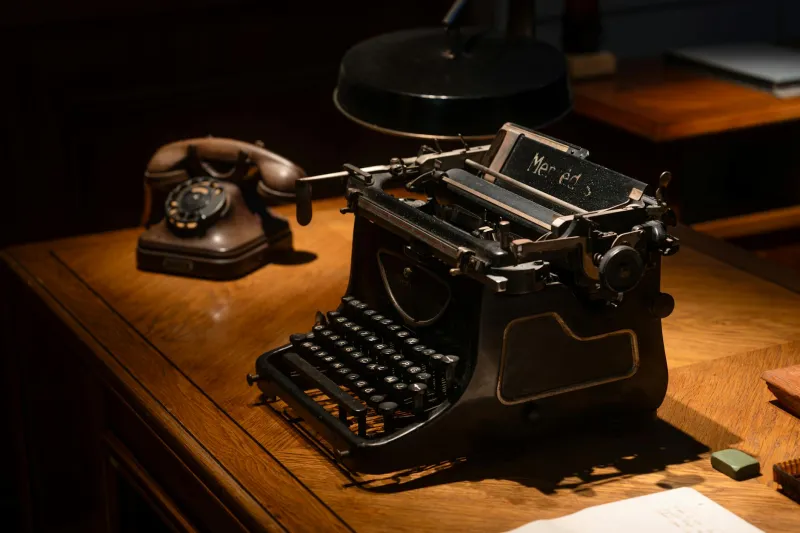
In 1952, Joe Cossman was a struggling entrepreneur working from his kitchen table in Palm Springs, California. Armed with nothing more than a typewriter, some letterhead, and a $50 investment, he placed a small classified ad in Popular Mechanics magazine. He was selling a simple potato peeler he'd discovered at a trade show. Within months, he was processing thousands of orders daily from his spare bedroom, eventually selling over 2 million units.
 Photo: Palm Springs, California, via 4.bp.blogspot.com
Cossman's story wasn't unique—it was the American dream in action during the golden age of mail-order business. From the 1940s through the 1980s, ordinary Americans built extraordinary fortunes using nothing more than the U.S. Postal Service and a good idea.
When Your Mailbox Was Your Storefront
The mail-order business model was beautifully simple. You found or created a product, wrote compelling copy, placed affordable ads in magazines or newspapers, and waited for the checks to arrive. No website hosting fees, no search engine optimization, no social media advertising budgets that could drain a startup's capital in days.
Charles Atlas built his bodybuilding empire through comic book ads featuring the famous "97-pound weakling" getting sand kicked in his face. L.L. Bean started by selling a single product—waterproof hunting boots—through a four-page flyer mailed to hunting license holders. The Sharper Image began when Richard Thalheimer saw a cool jogging watch, bought the U.S. distribution rights, and sold it through a single ad in Runner's World magazine.
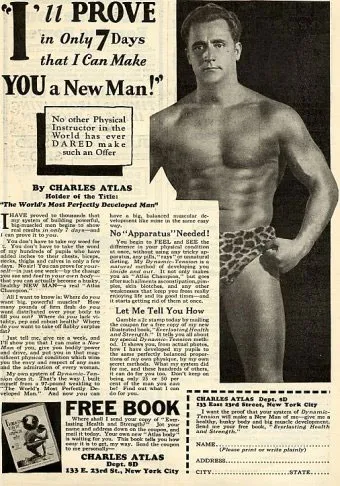 Photo: Charles Atlas, via www.charlesatlas.com
These entrepreneurs didn't need venture capital or technical co-founders. They needed stamps, envelopes, and the patience to wait for the postal service to deliver their dreams.
The $10 Million Empire Built on Curiosity
Consider Edmund Scientific Company, which grew from a small mail-order operation in the 1950s to a multi-million-dollar business selling scientific instruments and educational toys. Founder Norman Edmund started by purchasing surplus lenses from the government and selling them through small ads in Popular Science. His catalogs became legendary among curious Americans—thick booklets filled with telescopes, microscopes, and gadgets you couldn't find anywhere else.
The beauty of Edmund's business model was its accessibility. He didn't need to convince retailers to carry his products or negotiate with shopping mall landlords. He spoke directly to customers through his catalogs, building relationships through detailed product descriptions and educational content that made science accessible to everyone.
When Advertising Cost Quarters, Not Thousands
A full-page ad in Popular Mechanics in 1960 cost around $500. Today, that same reach through Google Ads could cost $50,000 or more, depending on your keywords and competition. Back then, a well-written classified ad in the right magazine could launch a business for under $100.
The mathematics were straightforward: if your product cost $2 to make and you could sell it for $10 through a $50 ad that reached 100,000 readers, you only needed a 1% response rate to double your money. Many successful mail-order products achieved response rates of 3-5%, creating instant profitability that funded rapid expansion.
The Personal Touch That Big Business Forgot
Mail-order entrepreneurs weren't just selling products—they were building relationships. Customers would write personal letters asking for advice, sharing stories about how products worked, or requesting modifications. Many businesses were built on these personal connections, with entrepreneurs keeping detailed card files of customer preferences and purchase histories.
Melvin Powers, who built a publishing empire selling self-help books through mail order, personally answered customer letters for decades. He'd include handwritten notes with orders, recommend additional titles based on previous purchases, and even offer refunds to dissatisfied customers without requiring returns. This personal approach created customer loyalty that lasted generations.
The Digital Revolution That Changed Everything
When the internet arrived, it seemed like mail-order entrepreneurs would have even more opportunities. And in some ways, they did. But the simplicity disappeared. Today's e-commerce requires website development, search engine optimization, social media management, and paid advertising across multiple platforms.
Where a 1970s entrepreneur could test a product idea with a $100 classified ad, today's startup might spend $10,000 on website development before selling a single item. The barrier to entry hasn't just increased—it's fundamentally changed from requiring creativity and persistence to demanding technical knowledge and significant capital.
What We Lost When Commerce Moved from Mailbox to Mouse Click
The mail-order era democratized entrepreneurship in a way that today's digital economy, for all its advantages, hasn't quite replicated. Success required patience, good writing, and the ability to build trust through words on paper. It rewarded careful product selection over rapid iteration, and customer service over customer acquisition metrics.
More importantly, it proved that American capitalism could thrive on a human scale. You didn't need to "move fast and break things" or "disrupt entire industries." You just needed to find something people wanted and figure out how to get it to them through the mail.
The entrepreneurs who built fortunes with stamps and envelopes understood something we've forgotten: sometimes the simplest path between a good idea and a successful business is the one that runs right through your local post office.