Six Weeks on the Ocean vs. Six Hours in a Seat: The Forgotten Age When Crossing the Atlantic Was the Trip of a Lifetime
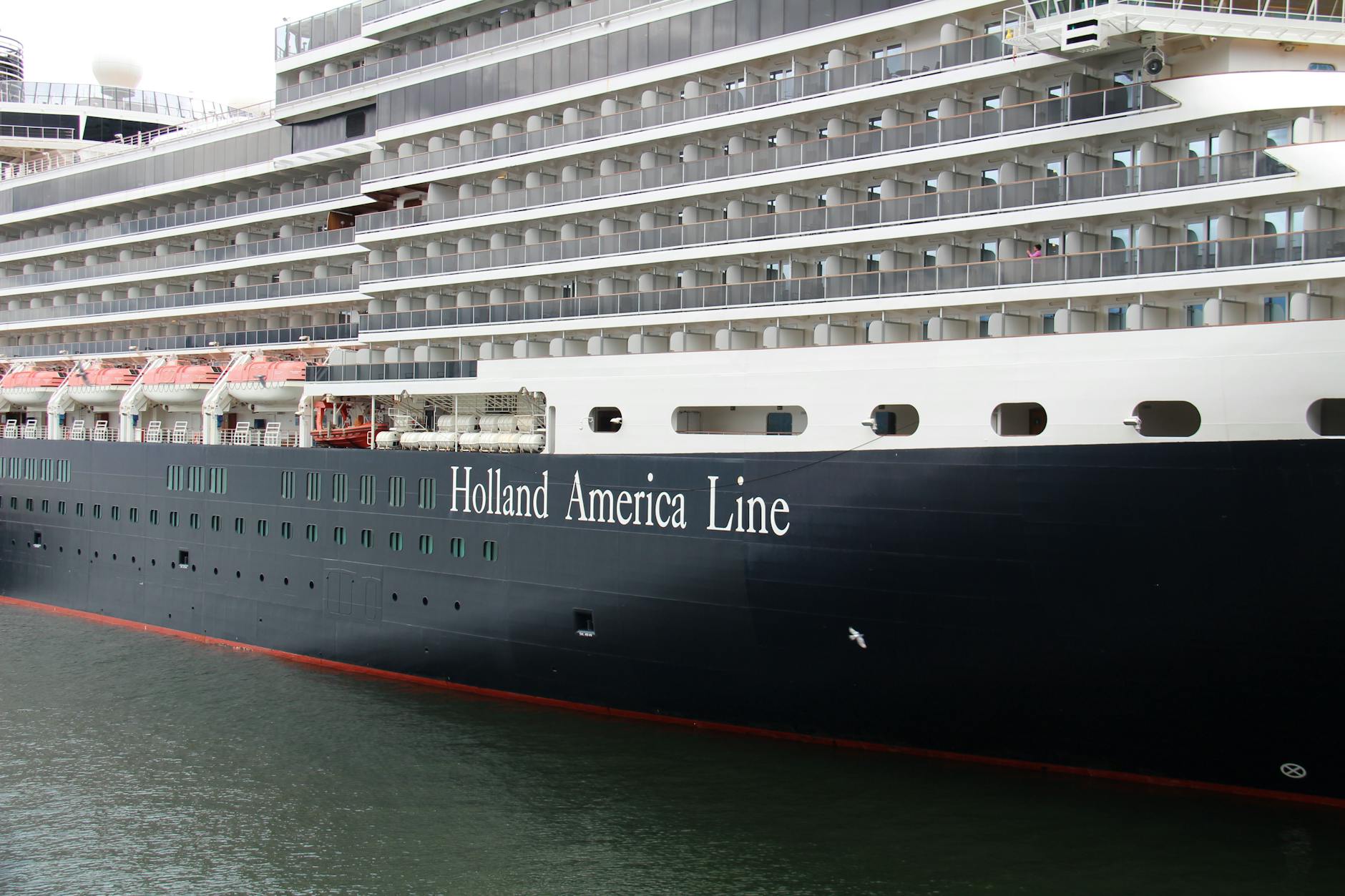
Six Weeks on the Ocean vs. Six Hours in a Seat: The Forgotten Age When Crossing the Atlantic Was the Trip of a Lifetime
Picture this: It's 1910. You've decided to travel from New York to London. Before you even set foot on a ship, you've spent weeks preparing. Your steamer trunk — a piece of luggage roughly the size of a small wardrobe — has been packed with formal dinner attire, day clothes, evening clothes, and everything in between, because the crossing will take approximately two weeks and social expectations on board are non-negotiable. You've written letters to family members, just in case. You've arranged your affairs. You are not taking a trip. You are embarking on a voyage.
Now picture this: It's 2024. You open an app, find a fare from JFK to Heathrow, tap your thumbprint to pay, and shove a carry-on into an overhead bin seven days later. You land, slightly stiff and mildly irritated that the in-flight Wi-Fi cut out over Greenland, and you're in London by lunchtime.
The distance is identical. The experience is almost unrecognizably different.
The Golden Age of Ocean Liners — Glamorous, Slow, and Occasionally Fatal
The great transatlantic liners of the early twentieth century were engineering marvels and floating social worlds. Ships like the Mauretania, the Île de France, and — most famously — the Titanic were designed to make the unavoidable weeks at sea feel like an event worth attending.
For first-class passengers, the experience was extraordinary. Multi-course dinners in grand dining rooms. Promenade decks for morning walks. Libraries, smoking rooms, and ballrooms. If you had the money and the right connections, crossing the Atlantic was the social occasion of the year.
But the majority of transatlantic passengers weren't in first class. They were in steerage — the lower decks, where immigrants and working-class travelers crossed in cramped, often miserable conditions, sharing communal sleeping quarters and hoping the weather stayed calm. For those passengers, the crossing wasn't glamorous. It was an endurance test.
And for everyone on board, regardless of class, there was an underlying reality that no amount of mahogany paneling could fully disguise: the Atlantic Ocean in the early 1900s was genuinely dangerous. Storms were unpredictable. Navigation was imprecise. Communication with the shore was limited to wireless telegraph — and even that was a recent innovation. The Titanic disaster in 1912 wasn't a shocking aberration. It was a brutal reminder of what ocean travel actually involved.
The Numbers That Defined the Journey
The logistics of early transatlantic travel are almost incomprehensible by modern standards.
A first-class ticket on a premium liner in the early 1900s could cost the equivalent of $50,000 to $100,000 in today's money. Even a steerage ticket represented a significant financial commitment — often the bulk of a working person's savings. The crossing itself took anywhere from 10 to 14 days on a fast modern steamer, and significantly longer on older or slower vessels.
The preparation time alone — packing, arranging transportation to the port, boarding procedures — could add days to either end of the journey. If you were traveling from somewhere like Chicago or St. Louis, getting to New York first added another layer of time and cost. A round trip to Europe from middle America in 1910 was, realistically, a six to eight week undertaking. It was not something you did casually. It was something you planned for years.
Then Came the Airplane — And Everything Accelerated
Commercial transatlantic flight didn't arrive overnight. The first non-stop transatlantic flight took place in 1919, when Charles Lindbergh's famous solo crossing in 1927 captured the world's imagination. But regular passenger service between the U.S. and Europe didn't become a practical reality until the late 1930s, and even then it remained the domain of the wealthy and the well-connected.
By the 1950s and 1960s, jet-age aviation began to genuinely democratize the crossing. The Boeing 707, entering commercial service in 1958, reduced the transatlantic journey to roughly seven hours. Fares were still expensive by today's standards — a transatlantic ticket in 1960 cost the equivalent of around $1,500 to $2,000 in modern dollars — but the journey had fundamentally changed its character. It was no longer a voyage. It was a flight.
Today, a round-trip economy ticket from New York to London can be found for under $500 with advance booking. Budget carriers have pushed fares even lower on certain routes. The crossing takes roughly six to seven hours westbound and slightly less heading east. Millions of Americans do it every year without giving it a second thought.
Did We Lose Something Along the Way?
There's a version of this story that's purely triumphant. Faster, cheaper, safer, more accessible — by every measurable standard, modern transatlantic travel is a staggering improvement on what came before. Nobody seriously wishes they were back in steerage on a two-week ocean crossing.
But there's another version of the story worth sitting with for a moment.
When the Atlantic crossing took weeks, the journey itself was part of the experience. You had time to transition — to mentally leave one world behind before arriving in another. You met people. You read. You watched the ocean. You arrived somewhere feeling genuinely, unmistakably elsewhere. The distance between America and Europe wasn't just geographical. It was experiential.
Today, you can eat dinner in Manhattan and have lunch in Paris the next day. The world has shrunk to a degree that previous generations would have found miraculous. But something about that compression has made the extraordinary feel routine. The traveler who once wrote home about the crossing with wonder now scrolls Instagram at 35,000 feet and complains about the legroom.
Maybe that's just progress. Maybe the romance of difficult travel is easy to sentimentalize when you've never had to actually do it. But the next time you're boarding a transatlantic flight with nothing but a backpack and a boarding pass on your phone, it's worth pausing — just briefly — to appreciate what an astonishing thing that actually is. Your great-grandparents would have been speechless.