Staring Out the Window Was the Point: What the American Commute Lost When It Got Entertaining
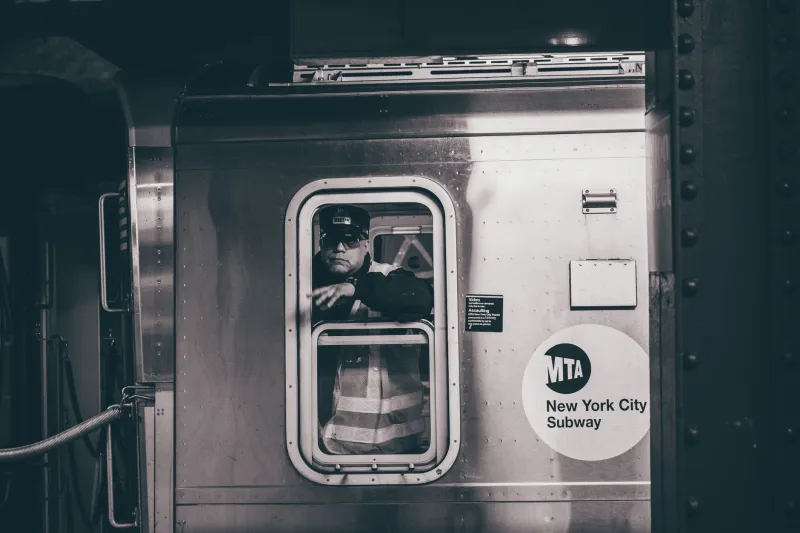
There was a time when the daily commute was forty minutes of doing absolutely nothing — and that was quietly, accidentally good for you. Before smartphones turned every idle moment into a content opportunity, Americans rode trains and buses in something we've almost forgotten how to do: genuine stillness. What happened when we decided that was a problem worth solving?
The Commute Nobody Complained About (Enough)
Cast your mind back to the mid-1980s or early 1990s. A commuter boarding a Chicago El train or a New Jersey Transit bus carried maybe a folded newspaper, a paperback with a creased spine, or absolutely nothing at all. The ride was the ride. You watched buildings slide past. You thought about the argument you'd had at breakfast. You mentally rehearsed a difficult conversation you needed to have with your boss. Sometimes you just zoned out, your eyes fixed somewhere between the window and the middle distance, your brain doing whatever brains do when nobody's asking anything of them.
This wasn't considered a waste of time. It was just Tuesday.
The average American commute in 1990 was around 22 minutes each way, according to Census Bureau data. By 2019, that had crept up to nearly 28 minutes — longer, yes, but more importantly, transformed into something almost unrecognizable in terms of how people actually experienced it.
When Distraction Became Infrastructure
The shift didn't happen overnight, but it happened faster than most people registered. The Walkman gave commuters a soundtrack in the 1980s. The Discman made it skippable. MP3 players made it vast. Then the iPhone arrived in 2007 and quietly dismantled the entire architecture of idle time.
Within a few years, the commute had become a second screen. Podcasts. Streaming video. Social media feeds that refreshed themselves endlessly. News alerts. Text threads. By 2023, studies were showing that the average American spent more than four hours a day on their smartphone — and the commute became one of the primary feeding windows for that habit.
The curious thing is that we mostly framed this as progress. Dead time, monetized. Wasted minutes, reclaimed. The commute went from something you endured to something you could optimize.
But optimization assumes the original state was broken.
What Boredom Was Actually Doing
Here's what the research has been quietly suggesting for years: unstructured mental downtime isn't wasted time. It's processing time.
Neuroscientists have a name for the brain activity that happens when you're not focused on a specific task — the default mode network. It's associated with consolidating memories, working through emotional experiences, and generating creative connections between ideas. In plain terms, it's the brain cleaning house. And it tends to activate most reliably during exactly the kind of low-stimulation, slightly boring moments that the old commute provided in abundance.
The commuter staring out the window at a grey stretch of New Jersey wasn't doing nothing. They were integrating. Processing. Sometimes, without meaning to, problem-solving.
When every gap in stimulation gets filled with a podcast or a TikTok scroll, that window closes. Not permanently — sleep still provides some of it — but the casual, ambient version that used to happen during the in-between moments of daily life has shrunk considerably.
The Newspaper Was Different, Too
It's worth noting that even the commuters who did read on the train in 1985 were doing something structurally different from today's digital consumption. A folded copy of the Chicago Tribune had a beginning, a middle, and an end. You read the front page, maybe the sports section, possibly the weather. Then you were done. The information had edges.
Today's phone-based news consumption has no such shape. The feed is infinite by design. Algorithms are built to extend your session, not to conclude it. The old commuter finished their newspaper and then just... sat there. Which meant the last ten minutes of the ride were still unstructured. Still quiet.
That quiet was doing something.
The Driving Commute Had Its Own Version
For the millions of Americans who drove to work rather than rode, the pre-smartphone commute had its own particular texture. Radio, yes — but radio that ended songs and moved on, that had commercial breaks you couldn't skip, that occasionally played something you didn't choose and ended up loving. And between stations, or in a car that hadn't warmed up enough to bother with the dial, there was just the road and your thoughts.
Many people report that their best ideas have historically arrived in the shower or during a drive. That's not coincidence. Those are two of the last remaining environments where external stimulation is limited and the mind is permitted to wander. The shower hasn't changed much. The drive has — with Spotify, Audible, Apple CarPlay, and navigation apps narrating every turn.
Nobody's Suggesting You Suffer Through a Silent Bus Ride
This isn't an argument for banning headphones or pretending the old commute was some golden era of intellectual flourishing. Plenty of those window-gazers were just tired. Plenty were anxious and would have welcomed any distraction available.
But there's a difference between distraction as occasional relief and distraction as default setting. What changed over the last thirty years isn't that people sometimes fill commute time with entertainment. It's that emptiness itself became uncomfortable — a problem to be solved rather than a space to be inhabited.
A generation of Americans grew up with commutes that had natural gaps. Those gaps, unremarkable as they were, may have been doing more structural work than anyone appreciated at the time.
The Thought That Never Got Finished
Somewhere between the Walkman and the algorithm, the commute stopped being a thinking space and became a consumption space. That's not inherently catastrophic. But it's worth asking what kinds of thoughts used to get finished during those forty minutes of nothing — and where they're supposed to happen now.
Because the brain still needs the time. It just doesn't always get it anymore.