When Every Block Had a Store Owner Who Knew Your Name: America's Lost Neighborhood Commerce
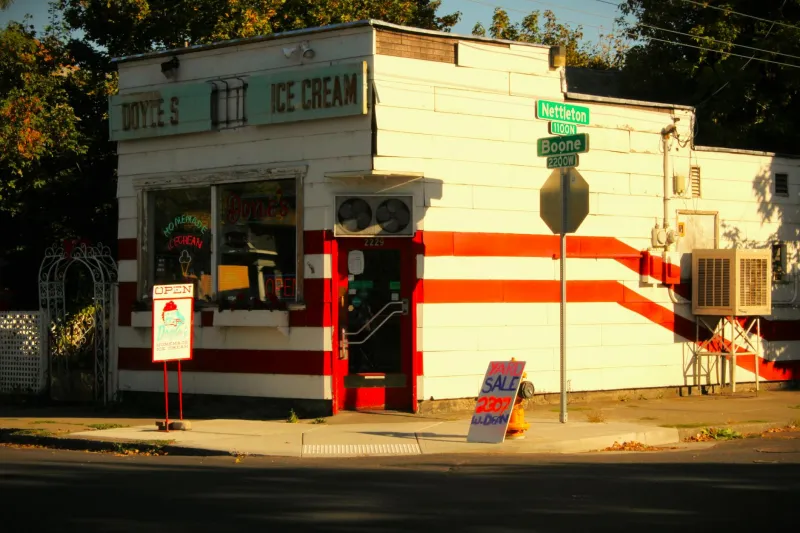
Picture this: It's 1963, and you need milk, aspirin, and your daughter's school shoes resoled. Instead of driving to three different strip malls, you walk two blocks and visit three neighbors who happen to run businesses from storefronts on your street. The grocer asks about your husband's new job, the pharmacist remembers your usual headache remedy, and the cobbler has your shoes ready because he saw you coming down the sidewalk.
This wasn't small-town America—this was how most American neighborhoods operated until the 1970s. From Brooklyn brownstone districts to Chicago's bungalow blocks, local commerce wasn't just convenient; it was woven into the social fabric of daily life.
The Golden Age of the Corner Store
In 1960, America had over 58,000 independent grocery stores. These weren't quaint mom-and-pop operations struggling to survive—they were thriving businesses that anchored their communities. The typical American family did their shopping at five or six different local stores within a few blocks of home: the butcher, the baker, the pharmacist, the dry cleaner, and the general store that sold everything from newspapers to nails.
These store owners weren't just merchants; they were community pillars. They extended credit during tough times, held packages for neighbors, and served as informal news networks. The corner grocer knew that Mrs. Johnson's arthritis was acting up before her own family did, simply because she'd switched from her usual heavy detergent to a lighter brand.
Neighborhood commerce created what urban planners now call "eyes on the street"—natural surveillance that made communities safer. Store owners watched for unfamiliar faces, kept an eye on kids walking home from school, and noticed when elderly neighbors hadn't been seen in a few days.
The Suburban Shift That Changed Everything
The transformation began in earnest during the 1960s. As Americans moved to suburbs designed around car ownership, shopping patterns fundamentally changed. The new suburban ideal promised convenience and choice, but it came with an unexpected cost: the death of walkable neighborhood commerce.
Big-box retailers like Walmart (founded in 1962) and shopping mall developers offered something corner stores couldn't match: vast selection and rock-bottom prices. Why buy milk at Johnson's Corner Store for 89 cents when the new supermarket five miles away sold it for 79 cents?
The math seemed simple, but the hidden costs were enormous. Families traded the five-minute walk to the corner store for twenty-minute drives to shopping centers. They exchanged personal relationships with shopkeepers for anonymous transactions with teenage cashiers. Most significantly, they gave up the spontaneous social interactions that had defined neighborhood life for generations.
Today's Retail Reality
By 2020, America had fewer than 21,000 independent grocery stores—a 60% decline from 1960's peak. Meanwhile, the average American now drives 4.2 miles to reach their primary grocery store, compared to the three-block walk that was standard in 1960.
The modern shopping experience prioritizes efficiency over connection. We order groceries online for delivery, pick up prescriptions through drive-through windows, and buy most household items from Amazon warehouses hundreds of miles away. The convenience is undeniable, but we've lost something profound in the process.
Consider the social implications: In 1960, running errands meant encountering a dozen neighbors and local business owners. Today, you can meet all your shopping needs without speaking to a single person you know. The corner store served as an informal community center where neighbors shared news, kids learned social skills by running errands for their parents, and elderly residents maintained daily human contact.
The Ripple Effects We Never Saw Coming
The disappearance of neighborhood commerce created problems that policymakers are still trying to solve. "Food deserts"—areas without easy access to fresh groceries—now affect 23.5 million Americans. These are often the same neighborhoods that once supported thriving corner stores and local markets.
The economic impact extends beyond retail. When neighborhood stores closed, they took with them entry-level jobs, small business ownership opportunities, and local wealth circulation. Money that once stayed in the neighborhood now flows to corporate headquarters in distant cities.
Perhaps most surprisingly, the loss of walkable commerce has contributed to America's loneliness epidemic. The casual social interactions that happened naturally during daily errands—chatting with the butcher while he wrapped your order, catching up with neighbors at the pharmacy—have largely disappeared from American life.
What We Gained and Lost
Today's retail landscape offers undeniable advantages: lower prices, vast selection, and unprecedented convenience. You can buy organic produce from California, craft beer from Belgium, and electronics from Asia, all from stores that stay open late and offer ample parking.
But we've traded community for convenience. The corner store owner who knew your family's shopping habits has been replaced by algorithms that track your purchasing patterns. The neighbor who ran the local pharmacy has been replaced by a corporate chain where you're just another customer number.
Some cities are recognizing what they've lost. Urban planners now prioritize "15-minute neighborhoods" where residents can meet most daily needs within a short walk. Small-scale retail is making a comeback in gentrifying areas, though often at price points that exclude longtime residents.
The transformation from neighborhood commerce to big-box retail represents more than just a shift in shopping habits—it reflects a fundamental change in how Americans relate to their communities. We gained efficiency and choice but lost the daily interactions that once made neighborhoods feel like extended families.
That corner store wasn't just selling milk and bread. It was selling something far more valuable: a sense of belonging to a place where everybody knew your name.