When Everyone Came Home for Dinner: The Lost Ritual That Once Defined American Families
When Everyone Came Home for Dinner: The Lost Ritual That Once Defined American Family Life
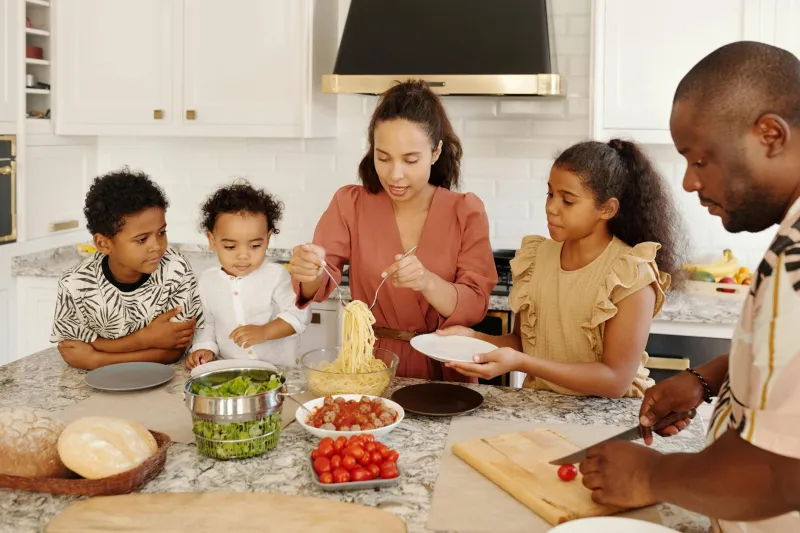
In 1960, if you walked through any American neighborhood at 6 PM, you'd witness something remarkable: the synchronized choreography of family dinnertime. Porch lights flickered on, screen doors slammed shut, and the familiar call of "dinner's ready!" echoed from kitchen windows. Children abandoned their bicycles mid-ride, fathers loosened their ties as they walked through the front door, and mothers orchestrated the final moments of meal preparation with military precision.
This wasn't just eating—it was the cornerstone of American family life.
The Sacred Hour of 1960s America
Back then, the family dinner operated on a schedule as reliable as the evening news. Dad worked a standard 9-to-5 job and was expected home by 5:30. Mom had spent the afternoon preparing a full meal from scratch—pot roast, mashed potatoes, green beans, and maybe a Jell-O salad for good measure. The television stayed off, the phone went unanswered, and for one precious hour, the outside world ceased to exist.
Children learned table manners not through formal instruction but through daily practice. They discovered that adults had opinions about politics, that their siblings had crushes at school, and that their parents were real people with stories from before kids came along. The dinner table served as democracy's smallest classroom, where everyone got a voice and conversation flowed in all directions.
Research from the era shows that over 80% of American families ate dinner together every single night. It wasn't considered special or noteworthy—it was simply what families did.
The Great Unraveling Begins
The transformation didn't happen overnight. The 1970s introduced the first cracks in the dinner table foundation as more mothers entered the workforce. Suddenly, that 5:30 arrival time became a frantic sprint between picking up kids from daycare, stopping at the grocery store, and attempting to recreate the elaborate meals of the previous generation.
The 1980s brought microwave ovens and the revolutionary concept of "heating up" rather than "cooking from scratch." TV dinners evolved from aluminum trays into sophisticated frozen meals, complete with separate compartments for vegetables and dessert. The family dinner began its slow migration from the dining room table to individual TV trays in the living room.
By the 1990s, dual-career households became the norm rather than the exception. Soccer practice, piano lessons, and after-school jobs created scheduling puzzles that made synchronized eating feel nearly impossible. Fast food restaurants recognized this shift and began marketing directly to harried parents with promises of quick, convenient family meals.
Today's Fragmented Food Culture
Step into a modern American home at 6 PM today, and you'll find a dramatically different scene. Dad might be stuck in traffic on his evening commute. Mom could be shuttling kids between activities. Teenagers grab protein bars between basketball practice and part-time jobs. Younger children eat chicken nuggets while streaming cartoons on tablets.
When families do gather for meals, they're often interrupted by buzzing phones, work emails, and the constant temptation of entertainment options. The average American family meal now lasts just 12 minutes—barely enough time to pass the salt, let alone engage in meaningful conversation.
Food delivery apps have transformed dinner from a shared experience into an individual choice. Each family member can order exactly what they want, exactly when they want it. While this represents unprecedented convenience and variety, it also eliminates the compromise and negotiation that once characterized family mealtime decisions.
What We Lost Beyond the Meal
The decline of family dinners represents more than just a change in eating habits—it marks the erosion of a fundamental social institution. Child psychologists point to family meals as crucial for emotional development, noting that children who regularly eat with their families demonstrate better communication skills, stronger academic performance, and lower rates of risky behavior.
The dinner table once served as the family's information hub. Parents learned about their children's daily struggles and triumphs. Siblings discovered each other's personalities beyond the rivalry and competition that defined their other interactions. Extended family stories passed down through generations during these daily gatherings, creating a sense of continuity and belonging that's increasingly rare in our mobile society.
Perhaps most significantly, the family dinner provided a daily opportunity for parents to model adult behavior and values. Children observed how their parents handled disagreements, celebrated successes, and navigated the complexities of adult relationships. These informal lessons in human interaction can't be replicated through scheduled "quality time" or weekend activities.
The Economics of Eating Together
The shift away from family dinners also reflects broader economic changes. In 1960, the median home cost roughly twice the median family income. Today, that ratio has nearly tripled, forcing many families to prioritize work schedules over mealtime schedules. The luxury of arriving home by 5:30 PM has become increasingly unattainable for families struggling to afford housing, healthcare, and education.
Restaurant spending has skyrocketed from roughly 25% of food budgets in 1960 to over 50% today. What once represented a special occasion—eating out as a family—has become routine necessity for families juggling impossible schedules.
Attempts at Revival
Some families are pushing back against this trend, implementing "phone-free" dinner policies and designating certain nights as mandatory family meal times. Schools have begun incorporating lessons about the importance of family meals into health curricula. Even some employers are experimenting with earlier end times to help workers prioritize family dinner.
But these efforts swim against powerful cultural currents. The expectation of constant availability, the pressure to maximize children's extracurricular opportunities, and the economic reality of dual-career households make the 1960s model of family dinner feel almost quaint.
The Table That Built America
Looking back, the decline of the American family dinner represents one of the most significant social changes of the past half-century. What once seemed like the most natural thing in the world—coming together at the end of each day to share food and conversation—now requires deliberate planning and significant sacrifice.
The dinner table that once anchored American family life has become another casualty of our increasingly fragmented, individualized culture. Whether this represents progress or loss depends on your perspective, but there's no denying that something fundamental changed when we stopped expecting everyone to come home for dinner.
In our rush toward convenience and efficiency, we may have optimized away one of the simple pleasures that made family life meaningful. The question isn't whether we can return to 1960—we can't. The question is whether we can find new ways to create the connection and continuity that the family dinner once provided, or whether we'll continue to eat alone together in the same house.