When Paper Maps Were Your Co-Pilot: How America Traded Adventure for Efficiency
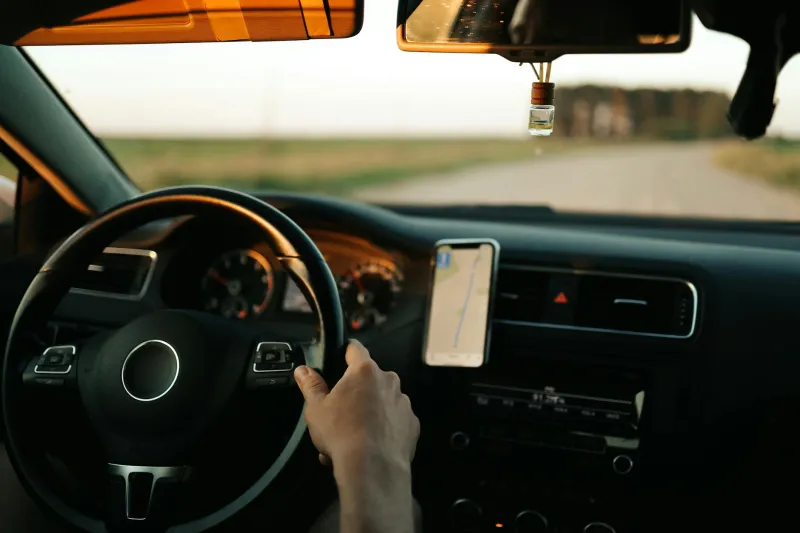
The Ritual of Unfolding America
Remember the sound of a paper map crackling open across your dashboard? That distinctive rustle was the opening note of every great American road trip, followed by the inevitable argument about how to refold the thing properly. In 1985, if you wanted to drive from Chicago to Denver, you didn't just punch coordinates into a device and follow a blue line. You planned.
You spread that map across your kitchen table, traced routes with your finger, and made decisions. Interstate 80 through Nebraska? Faster, but boring. Highway 36 through Kansas? Longer, but you'd pass through small towns with names like Goodland and Smith Center. Each choice carried weight because once you were on the road, changing course meant pulling over, wrestling with that map again, and actually thinking about where you were in relation to where you wanted to be.
When Gas Stations Were Navigation Hubs
Every gas station was a potential lifeline. The attendant behind the counter wasn't just selling you unleaded regular—they were your local guide, armed with intimate knowledge of shortcuts, road construction, and which diner served the best pie three towns over. "You're heading to Flagstaff? Well, you could take the interstate, but if you've got time, take Highway 89 through Sedona. Trust me on this one."
These interactions were brief but genuine human connections. You'd leave with more than directions—you'd have a story, a recommendation, maybe even a warning about a speed trap outside Tucumcari. Today's equivalent is Siri's sterile voice announcing "In 400 feet, turn right," devoid of personality, local wisdom, or the possibility of discovering something unexpected.
The Beautiful Agony of Being Lost
Getting lost wasn't a glitch in the system—it was part of the experience. Sure, it was frustrating when you realized you'd somehow ended up on the wrong side of Phoenix, but it was also how you discovered that roadside barbecue joint that would become a family legend. How you stumbled upon the world's largest ball of twine or found yourself at a county fair you never knew existed.
Being lost required problem-solving skills that we've essentially outsourced to satellites. You had to read street signs, notice landmarks, ask strangers for help. You developed a sense of direction, an understanding of how cities were laid out, an intuitive feel for geography that came from actually navigating through it rather than blindly following commands.
The Death of Serendipity
Modern navigation has optimized away the unexpected. GPS routes you along the fastest path, steering you clear of anything that might slow you down—including the very discoveries that once made road trips memorable. That scenic overlook? You'll never know it exists because it adds three minutes to your journey. The historic downtown that's worth a walk? Your phone will route you around it via the bypass.
We've gained efficiency but lost serendipity. In 1995, a drive from Portland to San Francisco might include an unplanned detour through wine country because you saw a sign and thought "why not?" Today, deviating from your prescribed route triggers notifications and recalculations, subtly discouraging exploration in favor of arrival.
The Vanishing Art of Preparation
Planning a road trip once required research. You'd study atlases, call ahead to motels, maybe even write to state tourism boards for information packets. This preparation created anticipation and investment in the journey itself. You knew something about every state you'd cross, every major city you'd pass through.
Now we've replaced preparation with real-time problem-solving. Need a hotel? There's an app. Hungry? Another app will find restaurants along your route. Lost? GPS will fix that instantly. But in solving these problems so efficiently, we've eliminated the need to engage with our surroundings in any meaningful way.
What We've Quietly Surrendered
The transformation from paper maps to GPS isn't just about navigation—it's about how we relate to space, place, and the journey itself. We've traded the tactile pleasure of tracing routes with our finger for the convenience of voice commands. We've exchanged conversations with locals for algorithmic efficiency. We've given up the possibility of genuine discovery for the certainty of arrival.
Young Americans today navigate their world through a screen, following blue dots along predetermined paths. They're incredibly efficient travelers but arguably less adventurous explorers. They can get anywhere, but they're less likely to end up somewhere unexpected.
The Road Less Calculated
The irony is that we have access to more of America than ever before—every back road is mapped, every destination is searchable—yet we explore less of it. GPS has made us passengers in our own journeys, following instructions rather than making discoveries.
Perhaps the real question isn't whether we can find our way without GPS (we probably can't), but whether we remember why getting lost was sometimes exactly where we needed to be. In our rush to arrive, we may have forgotten how to truly travel.
The next time your phone announces "You have arrived at your destination," consider this: you may have reached where you were going, but did you discover anything about where you've been?