The Backyard That Fed the Family: How America Turned Its Most Useful Space Into a Chore

Photo: Joe Haupt from USA, CC BY-SA 2.0, via Wikimedia Commons
In the 1940s, the backyard behind a typical American home was a busy place. There might be a vegetable patch running along the fence — tomatoes, beans, squash, maybe a row of corn. A small fruit tree or two near the back. Possibly a chicken coop tucked into the corner, supplying eggs on a near-daily basis. A workshop or tool shed where things got repaired rather than replaced. And on summer evenings, actual neighbors gathered in that space, because it was genuinely worth gathering in.
Walk into the average American backyard today and you'll find a lawn. Maybe a deck with some furniture. Possibly a gas grill. And an ongoing, expensive, largely joyless commitment to keeping all of it looking presentable.
Something significant happened to that space between then and now — and the full cost of the transformation rarely gets discussed.
When Backyards Actually Worked
The productive American backyard wasn't a 19th-century relic. It was alive and functioning well into the mid-20th century, particularly during and after World War II, when the federal government actively encouraged home food production through the Victory Garden program. At its peak, an estimated 20 million American households were growing a meaningful portion of their own vegetables. The backyard wasn't a hobby. It was infrastructure.
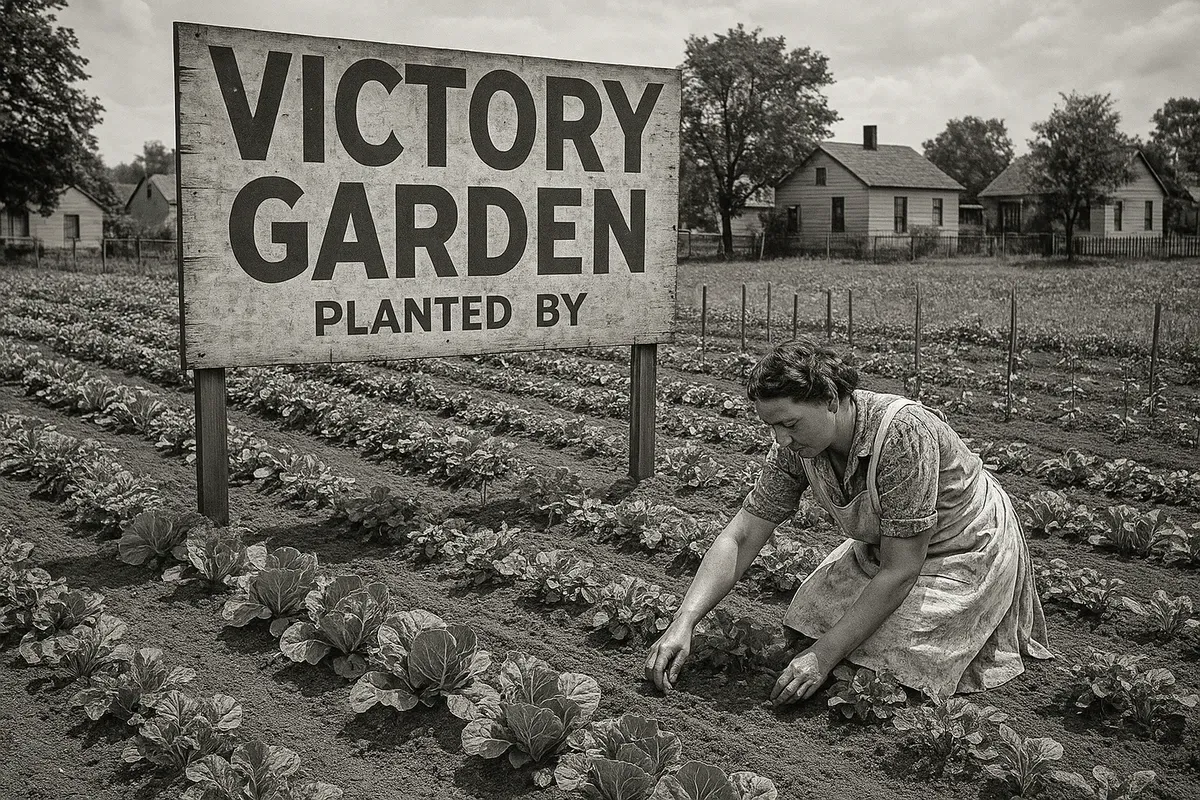 Photo: Victory Garden program, via www.mrsdavidsgardenseeds.com
This tradition didn't vanish overnight after the war. In working-class and immigrant communities especially, the productive backyard persisted for decades. Italian-American families in New Jersey grew fig trees and kept grape arbors. Families across the rural South maintained kitchen gardens as a matter of practical necessity. In many households, the backyard represented a genuine economic contribution — food that didn't have to be purchased, eggs that didn't have to be bought, repairs that didn't have to be paid for.
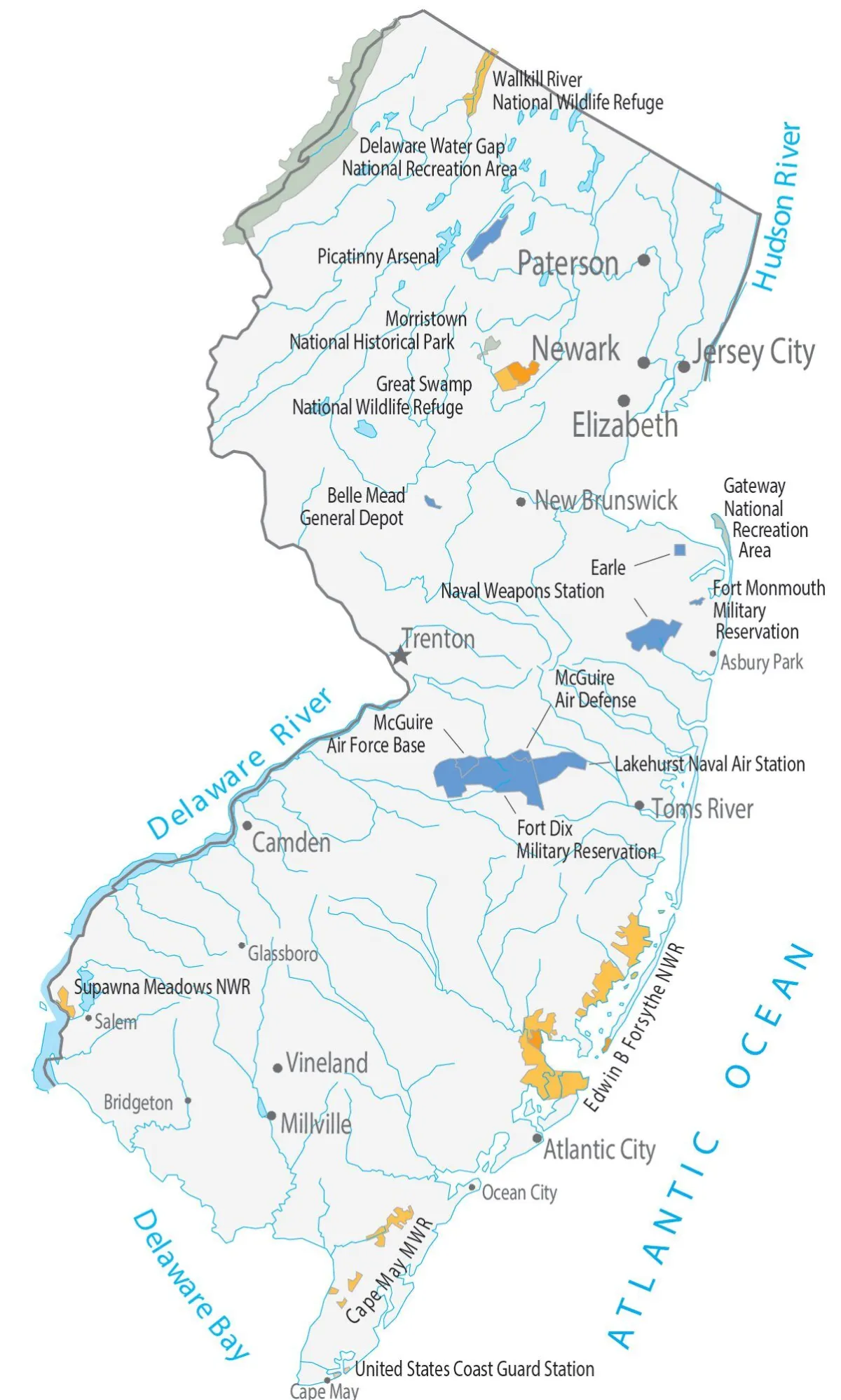 Photo: New Jersey, via gisgeography.com
The relationship people had with these spaces was fundamentally different from what most Americans experience today. The backyard was somewhere you used — daily, purposefully, with a clear return on your investment of time and effort.
How the Lawn Took Over
The transformation to the decorative, maintenance-heavy backyard is closely tied to postwar suburban expansion and the cultural values that came with it. As the suburbs grew in the 1950s and 1960s, a new ideal emerged: the uniform, well-kept lawn as a signal of middle-class respectability.
Lawn care companies, fertilizer manufacturers, and equipment sellers had obvious commercial interests in promoting this vision, and they did so aggressively. Homeowners' associations formalized the aesthetic through rules that often explicitly prohibited vegetable gardens in front yards and restricted backyard uses in ways that discouraged productive activity. The manicured lawn became not just a preference but, in many communities, a legal requirement.
The timing coincided with rising incomes and the expanding availability of cheap food through supermarkets. When you could buy tomatoes at the grocery store for next to nothing, the economic argument for growing your own weakened. The backyard garden started to feel optional — and then, gradually, eccentric.
By the 1980s, the template was largely set. The American backyard existed to look good from the kitchen window. Its value was aesthetic, not functional. And maintaining that aesthetic came with a price tag that kept climbing.
The Real Cost of a Perfect Lawn
Consider what the modern American backyard actually costs. The lawn care industry in the United States generates over $100 billion annually. The average homeowner spends somewhere between $1,200 and $3,000 per year on lawn maintenance alone — mowing, fertilizing, weed control, irrigation. Add landscaping, outdoor furniture replacement, deck maintenance, and the occasional hardscaping project, and the number climbs considerably higher.
That's money flowing out of the household, year after year, for a space that returns almost nothing tangible in exchange. No food. No materials. Increasingly, not even much social activity — the backyard as neighborhood gathering place has largely given way to the backyard as private retreat, often empty for weeks at a time.
Contrast that with what a productive backyard can return. A well-maintained vegetable garden in a modest suburban lot can realistically produce $600 to $1,500 worth of food annually, according to various extension service estimates. Backyard chickens, legal in a growing number of municipalities, supply eggs at a fraction of grocery store cost. Fruit trees, once established, produce for decades. A functional workshop space preserves the value of tools and enables repairs that would otherwise mean replacement purchases.
The math isn't complicated. One model costs money. The other generates it.
Something Broader Got Lost Too
The shift away from the productive backyard isn't only a financial story. It reflects a broader change in how Americans relate to self-sufficiency — and to their own homes.
The household that grew its own vegetables, kept a few chickens, and repaired its own equipment operated with a different relationship to its property. The home wasn't just a place to sleep and store possessions. It was a functioning unit that contributed to the family's welfare in concrete, daily ways. The skills required to maintain a productive backyard — gardening, animal husbandry, basic carpentry — were passed down across generations as a matter of course.
Those skills are now relatively rare. The knowledge that once moved naturally from parent to child has been replaced, in many households, by a number to call when something needs doing. That's not entirely a loss — specialization has genuine value — but it does mean that American homeowners are more dependent and less capable in their own spaces than their grandparents were.
There are signs of pushback. The pandemic years saw a genuine surge in backyard gardening, with seed companies reporting record demand in 2020. Urban chicken-keeping has grown steadily. Younger homeowners, many of them priced into smaller properties, are reconsidering what their outdoor space could actually do for them.
The Space Is Still There
The backyard hasn't gone anywhere. The land is still behind the house, the same square footage it always was. What changed was the idea of what it was for.
For a few decades in the middle of the last century, Americans treated that space as a resource — something to be worked, cultivated, and used. Then they were sold a different vision: a status symbol, a maintenance project, a green carpet that existed to be admired rather than inhabited.
The good news is that the land doesn't care which vision you choose. Plant something. Build something. Let the neighbors in. The most useful space in your property is still there, waiting to be useful again.