The Corner That Cared: What Disappeared When Your Drugstore Became a Superstore
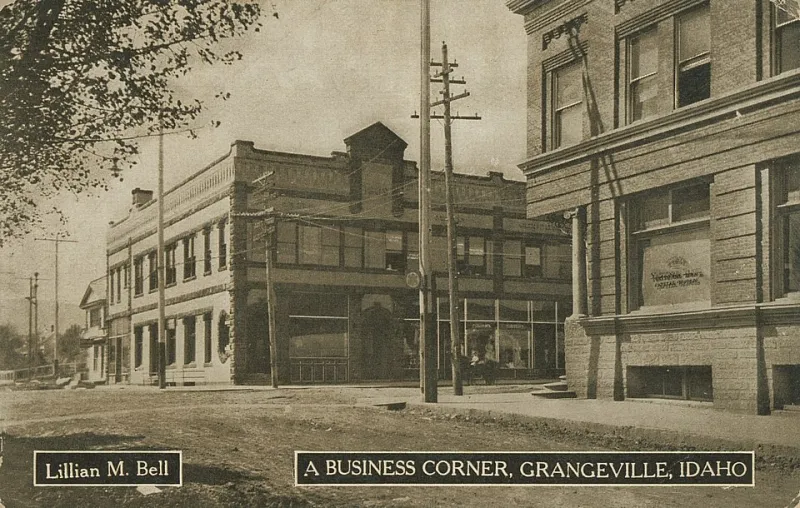
Photo: Lillian M. Bell, Public domain, via Wikimedia Commons
Somewhere between the soda fountain and the self-checkout kiosk, America lost something it didn't notice until it was already gone.
For most of the 20th century, the neighborhood pharmacy wasn't just a place you picked up medication. It was a community institution — as familiar and personal as the barbershop or the corner diner. The pharmacist behind the counter wasn't a stranger in a white coat. He was someone who had probably filled your parents' prescriptions, knew which medications you were on without pulling up a file, and would spend ten unhurried minutes explaining what a new drug actually did to your body. That kind of relationship wasn't a luxury. It was just how things worked.
When the Pharmacist Was Part of the Neighborhood
Independent pharmacies dominated American communities well into the 1970s and 1980s. These were small, owner-operated businesses where the pharmacist — often the owner — lived nearby, attended the same church, and coached Little League. The professional relationship was inseparable from the personal one.
Patients trusted these pharmacists in ways that went beyond medicine. They would ask about drug interactions before calling a doctor. They'd stop in with a vague symptom and get a straight answer. Elderly customers on fixed incomes were sometimes quietly extended informal credit. The pharmacist knew which families were managing chronic illness, which teenagers had just started new medications, and which elderly regulars needed someone to double-check that they were taking things correctly.
That intimacy wasn't incidental — it was clinically meaningful. Studies have consistently shown that pharmacist counseling reduces medication errors, improves adherence, and catches dangerous interactions that busy physicians sometimes miss. When your pharmacist knew your full history from memory, that safety net was built into every transaction.
The Chain Store Takeover
The shift began in the 1980s and accelerated sharply through the 1990s. National chains — CVS, Walgreens, Rite Aid — expanded aggressively, buying out independent pharmacies and standardizing the experience into something efficient, scalable, and almost entirely impersonal.
 Photo: Rite Aid, via purepng.com
The economics were straightforward. Chains could negotiate better drug prices, run centralized distribution, and operate on margins that small independents simply couldn't match. One by one, the corner pharmacies closed or were absorbed. The soda fountains went first. Then the personal records. Then, gradually, the conversations.
Today, the average chain pharmacy fills hundreds of prescriptions a day. The pharmacists working those counters are often genuinely skilled professionals doing an impossible job — managing clinical responsibilities, insurance questions, drive-through windows, and walk-in consultations all at once. The problem isn't the people. It's the system they're operating inside.
What the Modern Experience Actually Looks Like
Walk into a major chain pharmacy today and the contrast is jarring if you know what once existed. Your prescription is likely tracked through an app. You'll receive automated text messages telling you it's ready. You might use a self-service kiosk to check in. And when you do reach the counter, the pharmacist — if they're not currently on the phone with an insurance company — may have thirty seconds to speak with you before the next customer steps forward.
The physical store itself tells the story. Modern chain pharmacies sell beach towels, air fryers, greeting cards, motor oil, and seasonal decorations. The medication section — the reason the store theoretically exists — occupies a fraction of the floor space. The message, intentional or not, is clear: this is a retail operation that also dispenses drugs, not a healthcare institution that also sells a few sundries.
Drive-through pharmacy windows, now standard at most major chains, complete the transformation. You collect a controlled substance the same way you'd collect a fast food order. The interaction lasts under a minute. Nobody asks how you're doing.
What Gets Lost When the Personal Goes Away
The consequences of this shift are more than sentimental. Medication errors remain a significant public health issue in the United States, contributing to tens of thousands of hospitalizations annually. Many of these errors involve drug interactions, incorrect dosages, or patients who simply didn't understand their instructions. The counseling relationship that once caught these problems before they became crises has been systematically squeezed out of the system.
Older Americans feel this most acutely. Many grew up in a world where the pharmacist was a trusted advisor — someone who bridged the gap between the doctor's office and the kitchen table. That role has largely vanished, and nothing has fully replaced it.
There are exceptions. A small but determined network of independent pharmacies still operates across the country, often in smaller towns or urban neighborhoods that the chains find less profitable. These holdouts still offer something closer to the original model — personal records, real conversations, a pharmacist who might actually call to check on you after a new prescription. They're worth seeking out if you can find one.
A Different Kind of Progress
It would be easy to frame this as pure nostalgia — a longing for a simpler time that wasn't actually better. Chains did bring genuine benefits: lower prices, longer hours, greater convenience, and online prescription management that genuinely helps busy families.
But there's a real cost embedded in that convenience. When you trade a relationship for a transaction, something clinical and human disappears at the same time. The pharmacist who once knew your name, your history, and your family wasn't just a nice feature of a slower era. They were a functioning part of your healthcare.
America didn't just change where it buys its medication. It quietly dismantled a system that once made sure you actually understood what you were taking — and why.