The Letter That Arrived After the Funeral: What We Lost When Grief Went Digital
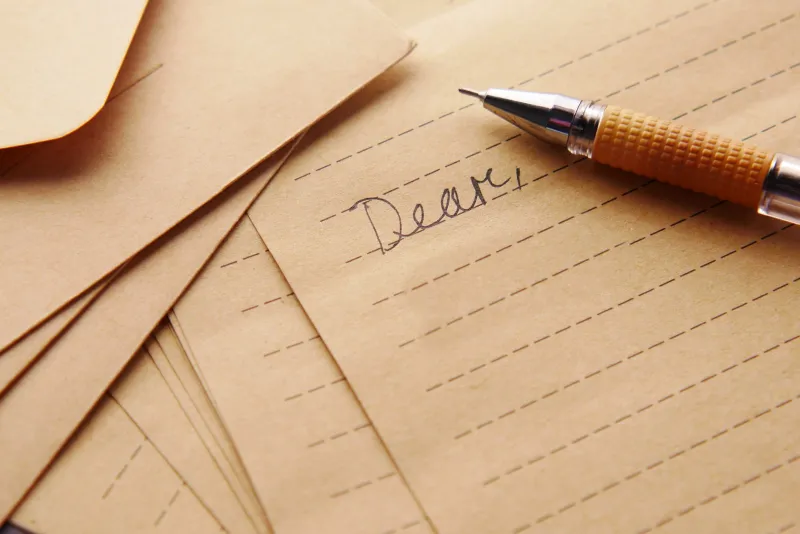
The envelope would arrive a few days after the service. Sometimes a week later. The handwriting on the front was always unmistakably personal — slightly uneven, occasionally smudged, nothing like print. Inside, a card or a few folded pages covered in someone's careful, deliberate words. Not perfect words. Often searching, imperfect, occasionally even awkward. But present in a way that mattered.
For most of American history, this was how people showed up for each other in grief. You sat down. You thought. You wrote. And somewhere across town — or across the country — someone held what you had made and understood, in a way that's hard to articulate, that they were not alone.
That ritual is quietly disappearing. And with it, something essential about how we honor each other.
When Condolence Was a Craft
The tradition of written sympathy correspondence in America runs deep. Through the 19th and early 20th centuries, grief was marked by elaborate social rituals — mourning dress, formal calling periods, carefully structured acknowledgment from the community. The sympathy letter was central to all of it, and people took the task seriously.
Department stores and stationery shops sold dedicated sympathy card lines. Etiquette books devoted entire chapters to the proper composition of condolence letters, advising writers on tone, length, and the importance of personalizing their words to the specific loss. A generic letter was considered nearly as rude as no letter at all.
The effort involved was the point. To sit down and write meaningfully about someone else's grief required you to actually enter it — to set aside your own discomfort with death and loss and to stay present with another person's pain long enough to find real words for it. That was not accidental. It was the whole purpose of the exercise.
The Physical Weight of Comfort
Ask anyone who has lost someone they loved about the letters and cards they received, and you'll hear a consistent response: they kept them. Sometimes for decades. Stored in shoeboxes, tucked into drawers, occasionally pulled out and reread years later.
There is something about a handwritten letter that a text message cannot replicate — a physicality that makes comfort tangible. You can hold a letter. You can feel the impression of the pen on the paper. You can see where someone paused, reconsidered, crossed something out. These imperfections are not flaws. They are evidence of effort, of genuine thought, of a person wrestling with how to reach you.
The sympathy card industry was once enormous precisely because Americans understood this intuitively. Hallmark built much of its early business on the sympathy category. Sending a card wasn't considered a minimum gesture — it was considered a real one. The card represented time, intention, and the social acknowledgment that someone's loss was significant enough to require a response beyond a passing word.
When Speed Replaced Depth
The shift didn't happen all at once. Email began eroding formal letter-writing culture in the 1990s. Social media accelerated everything. By the 2010s, the dominant mode of condolence in America had transformed into something almost unrecognizable compared to what preceded it.
Now, grief is often processed publicly and responded to in real time. A death is announced on Facebook. Within hours, hundreds of comments accumulate beneath the post — "So sorry for your loss," "Thinking of you," a string of broken heart emojis. The response is immediate, voluminous, and largely interchangeable. The same phrases repeat dozens of times in the same thread.
This isn't nothing. Knowing that people saw your loss and acknowledged it carries real meaning. But something has been quietly traded away in the exchange. The speed that makes digital condolence so easy is also what makes it so shallow. When expressing sympathy takes eight seconds, it cannot require the same emotional labor that once made the gesture meaningful.
The grief emoji — and yes, it now exists as a dedicated reaction on most platforms — represents the logical endpoint of this compression. A single click in response to the worst moment of someone's life.
What Effort Communicates That Efficiency Cannot
There's a reason people still remember specific sympathy letters they received years after the loss. The letter said, implicitly, something the emoji cannot: I stopped. I thought about you specifically. I tried to find the right words. I did this for you.
Grief is, at its core, an experience of isolation — the terrible aloneness of a loss that no one else can fully share. What meaningful condolence has always tried to do is bridge that isolation, however imperfectly. The effort required to write a real letter was not separate from its comfort. It was the comfort.
There are people who still write them. Older Americans, often, who grew up in a world where this was simply expected. And occasionally a younger person who has received one and understood, viscerally, the difference it made. These writers are not performing nostalgia. They are preserving a form of care that has real human value.
The Grief We Still Owe Each Other
None of this is an argument that modern communication is worthless, or that a heartfelt text from a close friend carries no meaning. Context matters. Relationships are complicated. Sometimes a phone call says more than any letter could.
But there is something worth examining in how dramatically and quickly Americans have reduced the standard of what counts as showing up for someone in pain. We didn't consciously decide that grief deserved less effort. We just allowed convenience to quietly set the bar lower, year by year, platform by platform, until the bar became nearly invisible.
Somewhere, right now, someone is sitting with a loss that feels impossible. A letter, real and handwritten and imperfect, might not fix anything. But it would arrive. It would be held. And it would say, in the way that only effort can say: You mattered enough for me to stop and try.
That used to be the minimum. It might be worth making it the standard again.