
You walked in with a broken thing and walked out knowing how to fix it. That was the deal.
For most of the twentieth century, the American neighborhood hardware store was one of the most quietly essential institutions on any Main Street. Not flashy. Not particularly photogenic. But utterly indispensable. The man — and it was almost always a man, often the same one for thirty years — behind the counter didn't just sell you a bolt. He identified the bolt, explained why the old one failed, told you what size wrench you'd need, and probably mentioned that your neighbor on Elm Street had the same problem last spring.
That kind of knowledge was free, and most people who grew up with it never fully appreciated how rare it actually was.
What the Neighborhood Hardware Store Actually Was
By the 1960s and into the 1970s, independently owned hardware stores were fixtures in American communities the way barbershops and diners were. They weren't just retail spaces — they were informal technical support centers, lending libraries for tools, and sometimes de facto credit unions for people who needed supplies before payday arrived.
The owner knew his inventory the way a librarian knows their shelves. You described a symptom — a dripping faucet, a door that wouldn't close right, a porch step that had started to give — and he translated it into a parts list. He'd done this ten thousand times. He'd seen every version of your problem. And if you were a regular, he'd often let you take something home on account, trusting you'd come back and settle up when the job was done.
Tool lending was common too. Need a pipe cutter for a one-time job? The guy behind the counter might hand one over with a look that said just bring it back clean. That wasn't policy. It was just how things worked when a business owner's reputation was tied directly to the wellbeing of his neighbors.
The Big-Box Shift That Changed Everything
Home Depot opened its first stores in Atlanta in 1979. Lowe's had been around since 1946 but expanded aggressively through the 1980s and 1990s. By the time the new millennium arrived, the independent hardware store had been largely squeezed out of the American commercial landscape. The numbers tell the story bluntly: in 1980, there were roughly 25,000 independent hardware stores operating across the United States. By the early 2000s, that number had fallen by more than half.
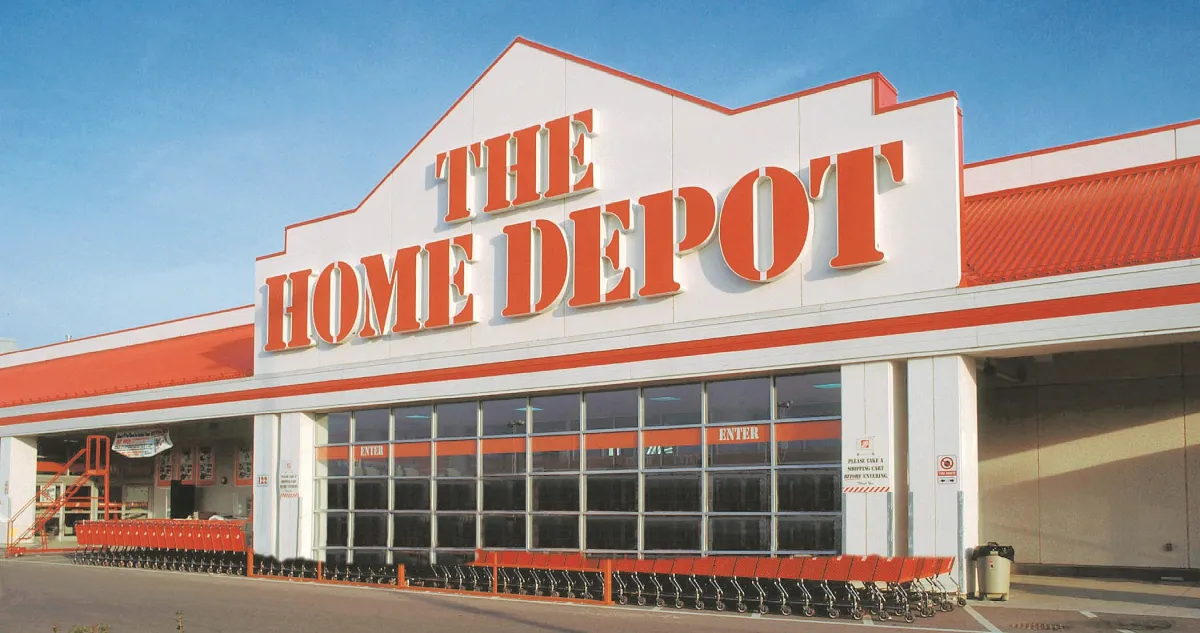 Photo: Home Depot, via metrocompactor.com
The big-box stores won on price and selection. Nobody's arguing that. A Home Depot carries somewhere around 35,000 products. Your old neighborhood hardware store might have stocked 10,000 on a good day. And yes, the lumber is cheaper, the paint section is bigger, and the parking lot fits three hundred cars.
But here's what the square footage doesn't include: someone who knows what you're talking about.
The staffing model at warehouse retailers is built around coverage, not expertise. Associates rotate departments. Turnover is high. The person in the plumbing aisle on Tuesday might be covering garden supplies by Thursday. There's no institutional memory, no accumulated neighborhood knowledge, no sense that the person helping you has any particular stake in whether your repair actually works.
When the Tutorial Replaced the Conversation
The gap left by the disappearance of that counter expertise has been partially filled by YouTube, and it's genuinely impressive how much you can learn from a well-made how-to video. Millions of Americans have successfully replaced water heaters, retiled bathrooms, and rewired light fixtures by watching someone else do it on a screen first.
But there's a meaningful difference between watching a video made for a general audience and talking to someone who has seen a hundred variations of your specific problem in houses built the same decade yours was. The video doesn't know that your house has galvanized pipes that behave differently from the copper in the tutorial. The video can't look at what you're describing and say, that's not actually the issue, the issue is upstream.
What we traded away wasn't just convenience. It was diagnostic wisdom — the kind that only comes from years of accumulated, community-specific experience.
The Informal Economy That Disappeared With the Store
There's another layer to this that tends to get overlooked. The neighborhood hardware store was an economic anchor in a way that big-box retail simply isn't. The owner lived locally, banked locally, hired neighborhood kids for weekend stock work, and spent his earnings within a few miles of where he made them. The economic multiplier effect of a locally owned business — the idea that dollars spent there circulate through the community rather than flowing to a distant corporate headquarters — is well-documented by economists who study small-town and urban neighborhood economies.
When the hardware store closed, that circulation stopped. The money went to Atlanta or Mooresville, North Carolina, instead of staying on the block.
What We Actually Lost
None of this is to say that big-box home improvement stores are bad. They've made serious DIY projects accessible to people who couldn't have afforded them otherwise, and that matters. But it's worth being honest about the full cost of the trade.
We lost a category of expert that lived in our neighborhoods and knew them intimately. We lost the informal credit and tool-sharing systems that helped working-class homeowners maintain their properties without breaking the bank. We lost a place where a first-time homeowner could walk in completely lost and walk out actually capable.
Most of all, we lost the particular confidence that comes from being helped by someone who genuinely knew what they were doing and had a personal reason to make sure you succeeded.
The next time you're standing in a big-box aisle, phone in hand, watching a video to figure out which fitting you need, that's not just a minor inconvenience. It's a small reminder of something that used to exist and quietly doesn't anymore.