The Morning Paper Could Wait Until Morning: Life Before the News Never Stopped
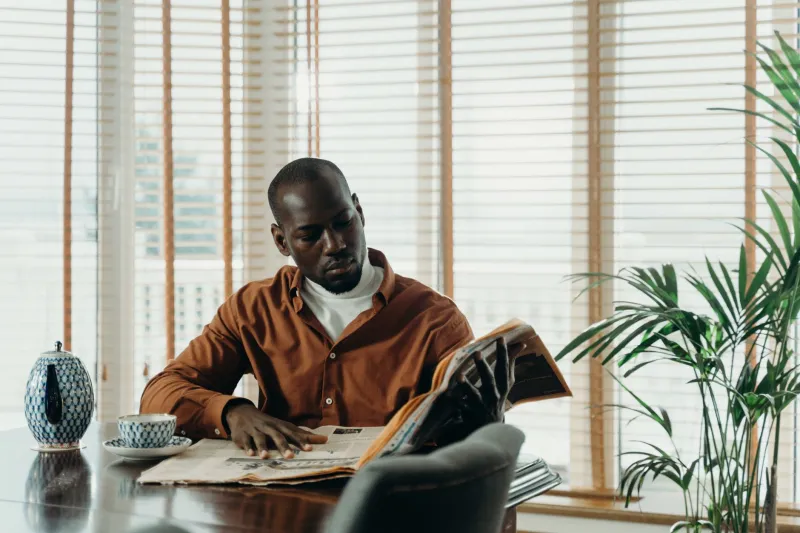
Somewhere around 1985, a typical American household started its day with a folded newspaper on the front stoop and ended it with a thirty-minute evening broadcast. In between, the news just... waited. Nobody expected updates. Nobody refreshed anything. If something big happened at 2 in the afternoon, most people wouldn't hear about it until dinnertime — and a fair number wouldn't know until the next morning.
That wasn't ignorance. That was just Tuesday.
The Rhythm of the Daily Edition
For most of the twentieth century, news arrived on a schedule. The morning paper landed before you left for work. The evening news ran at 6 or 6:30, depending on your market. If you missed it, you missed it. There was no catching up on your phone during a red light. There was no push notification vibrating against your thigh while you tried to enjoy a meal.
Weekly newsmagazines like Time and Newsweek went even further — they asked you to sit with the events of an entire week before rendering a verdict on what mattered. Journalists had time to verify. Editors had time to think. Readers had time to process. The whole system was built around a quiet assumption: that information was worth waiting for.
And because the supply of news was limited, people were selective about what they let in. You read the sections that interested you and skipped the rest. You didn't have an algorithm deciding what to surface next.
When CNN Changed Everything
The first real crack in the wall came in 1980, when CNN launched as the first 24-hour news network. Most media critics laughed. What could possibly fill all that airtime? The answer, it turned out, was repetition, speculation, and an increasing appetite for conflict — because conflict kept people watching.
By the 1990s, cable news had proven that Americans would tune in around the clock if the stakes felt high enough. The O.J. Simpson trial. The Gulf War. The Clinton impeachment. Each event demonstrated that a continuous news cycle could hold the country's attention indefinitely, as long as the story kept moving — or at least appeared to.
Then the internet arrived, and the floodgates opened entirely.
The Feed That Never Ends
Today, news doesn't arrive. It streams. It pulses. It interrupts. The average American now encounters hundreds of headlines a day across apps, social platforms, email newsletters, and browser notifications — most of which they never fully read. Studies suggest that a significant portion of people share articles based on the headline alone, which tells you something important about how shallow the consumption has become.
What's more, the news cycle has compressed from days to hours to minutes. A story breaks on Twitter before journalists have confirmed basic facts. Cable networks report on tweets. Corrections get buried under the next developing story. The whole ecosystem rewards speed over accuracy, and readers — whether they realize it or not — have been trained to accept that.
The psychological cost of this is real. Research consistently links heavy news consumption to elevated anxiety, particularly when the content is negative and relentless. There's even a term for it now: doomscrolling — the compulsive act of consuming bad news long past the point where it serves any useful purpose.
What Got Lost in the Acceleration
Here's the thing nobody talks about much: the old news cycle forced a kind of editorial triage that actually served readers well. Reporters and editors had to decide what was genuinely important before ink hit paper. Not everything made the front page. Not everything made the broadcast. That curation — imperfect as it was — meant that when something did reach you, it had already passed through a layer of professional judgment.
The modern feed has no such filter. Everything arrives with equal urgency. A presidential address and a celebrity breakup compete for the same real estate on your screen. The result is a kind of attention inflation, where nothing feels more important than anything else because everything is presented as breaking, vital, and immediate.
There's also something worth noting about trust. When news came from a single paper or a single anchor, Americans had a clearer sense of where information originated. They could evaluate a source over time. Now, a story can pass through six platforms and four rewrites before it reaches you, and the original context has been stripped away entirely. The relationship between reader and news organization — once built on decades of morning deliveries and familiar bylines — has been replaced by an anonymous scroll through an algorithm's best guess at what will make you feel something.
The Quiet That Used to Follow
Perhaps the most underrated loss is simpler than all of that. There used to be a moment each evening when the news was over. The broadcast ended. The paper had been read. The world would still be there tomorrow, and there was nothing left to check.
That moment of genuine closure — of permission to stop paying attention — is almost impossible to find now. There's always another update, another thread, another notification suggesting that something important just happened and you really should look.
The morning paper on the front stoop wasn't just a delivery mechanism. It was a boundary. It told you when the day's information was complete.
We traded that boundary for everything, all the time. Whether that was a fair trade is a question worth sitting with — preferably somewhere quiet, without your phone.