Nobody Knocked, They Just Came In: The Invisible Walls That Closed Off the American Neighborhood
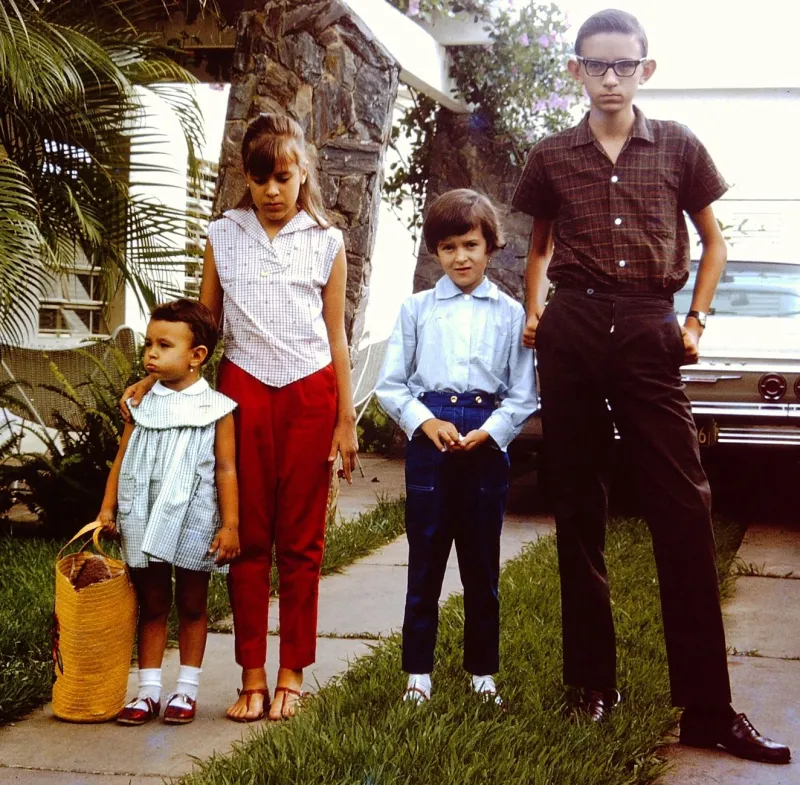
There was a version of American neighborhood life where the back door was never locked, kids migrated freely between yards, and a neighbor showing up unannounced wasn't an intrusion — it was just Tuesday. That world didn't disappear because of any single decision. It dissolved slowly, one Ring doorbell and one scheduled playdate at a time.
In the postwar suburbs that shaped so much of America's cultural imagination, the neighborhood operated as something close to a commons. Fences existed, but they were low, and most people treated them as suggestions rather than boundaries. A cup of sugar wasn't a metaphor — it was an actual transaction that happened regularly, and nobody thought much about it. Kids who wanted to play with the kid three houses down didn't text anyone. They walked over and knocked, or didn't even bother knocking, and the afternoon sorted itself out from there.
When the Street Was the Living Room
The physical design of mid-century American neighborhoods encouraged this kind of casual social life. Front porches faced the street. Driveways were short. Yards were open to each other. The architecture assumed that people would interact — not in scheduled, organized ways, but in the messy, unplanned way that actual community happens.
Parents kept track of their kids through a loose, neighborhood-wide surveillance network that operated entirely on trust and proximity. Mrs. Henderson two doors down would notice if something was wrong. The guy across the street who was always in his garage would wave if your kid came by. Nobody called it community care. It was just how things worked.
Dropping by unannounced was the default social mode. You didn't call ahead because calling ahead would have felt oddly formal — like announcing a visit to someone you saw every other day anyway. You walked over, knocked, and if they were busy, they said so and you left. If they weren't, you came in and sat at the kitchen table and talked for twenty minutes about nothing in particular, which was exactly what both of you needed.
The Slow Retreat Indoors
The transformation of the American neighborhood didn't happen overnight, and it didn't happen for one reason. It was a convergence — of technology, economic pressure, cultural anxiety, and architecture — that gradually drew American life away from shared outdoor space and into private, controlled interiors.
Air conditioning played a larger role than most people acknowledge. Once every house on the block had central air, the front porch stopped being a place where people actually spent time and became a decorative feature. Why sit outside in the July heat when the living room was seventy-two degrees? The porch that had functioned as a semi-public social space — visible to the street, acoustically open to passing neighbors — gave way to the sealed, climate-controlled interior.
The internet and cable television finished what air conditioning started. When entertainment stopped requiring you to leave the house, the gravitational pull of the neighborhood weakened. You didn't need to walk to a neighbor's house to talk about last night's game when you could do it in a comment section. You didn't need to borrow a recipe when you could find ten thousand versions online in the time it would have taken to walk next door.
The Surveillance Upgrade
And then came the cameras.
Ring doorbells and their competitors arrived with a pitch built entirely on safety — and it wasn't a dishonest pitch. Crime is real, package theft is real, and the ability to see who's at your door before you open it is a genuinely useful feature. Nobody who installs a video doorbell is doing something unreasonable.
But the cumulative effect of an entire neighborhood wired for surveillance changes the texture of casual social life in ways that are easy to miss. When a neighbor walks up your front path, they're now on camera before they reach the door. That footage may be reviewed. It may be shared. The spontaneous drop-by, which used to feel neighborly, now feels like an event that requires justification.
Neighborhood Facebook groups and apps like Nextdoor were supposed to rebuild community online. In some ways they have — coordinating lost pet searches, sharing recommendations, organizing block parties. But they've also become vectors for a particular kind of ambient suspicion, where unfamiliar cars and unfamiliar faces get reported and discussed in ways that would have seemed paranoid to the average suburban family of 1965.
The Scheduled Playdate and What It Signals
Nothing captures the shift more precisely than the playdate. The word itself didn't exist in common American usage until the 1980s, and it carries within it the entire architecture of the modern neighborhood: children's social lives are now managed, calendared, and supervised by adults who arrange them like business meetings.
This isn't because today's parents are more anxious by nature. It's because the conditions that made free-range neighborhood childhood possible have mostly disappeared. When kids don't know their neighbors, when front yards are empty, when there's no loose network of adult eyes on the street, the unstructured afternoon becomes genuinely riskier — or at least feels that way. The playdate is a rational response to an environment that no longer organizes childhood socially on its own.
But the cost is real. Kids who don't practice unstructured social navigation — who don't learn how to show up somewhere uninvited and figure out how to be welcome, or how to handle the afternoon when plans fall apart and nobody's in charge — are missing a form of social education that used to be built into the neighborhood itself.
The Wall That Isn't There
The strange thing about the modern American neighborhood is that it often looks almost identical to its mid-century version. Same streets, same yards, same house styles in many cases. The walls aren't visible. There are no gates in most suburban neighborhoods, no guards, no posted signs about restricted access.
But the social contract has been rewritten in ways that are just as effective as any physical barrier. The unannounced visit feels presumptuous now. The borrowed cup of sugar would require a text first. The kid who wanders three houses down uninvited might find a front door camera watching before anyone answers.
The neighborhood is still there. The community it used to generate, almost automatically, from proximity and open doors and the assumption of goodwill — that's the thing that got quietly fenced off, without anyone really deciding to do it.