One Payment, Forever Yours: How Software Went From Something You Owned to Something You Rent
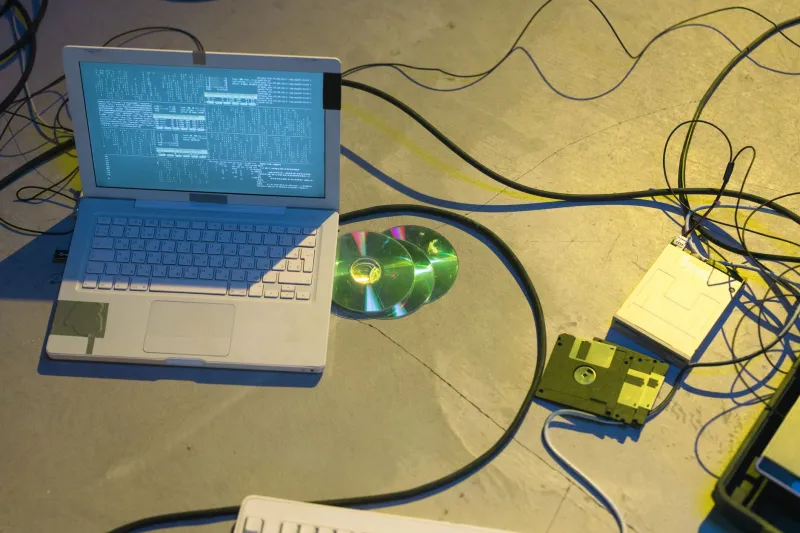
Picture a Saturday afternoon in 1998. You're at Best Buy, holding a box about the size of a hardcover novel. Inside: a CD-ROM, a fold-out instruction booklet, and a product key printed on a sticker. You pay $149 at the register, drive home, install the thing, and that's it. Microsoft Word is yours. Not for a year. Not until the company decides otherwise. Yours — permanently, unconditionally, no strings attached.
That transaction feels almost quaint now. Because somewhere between then and today, the software industry quietly rewrote the terms of the deal, and most consumers went along with it without fully realizing what they were giving up.
The Box Was the Product
For most of the 1980s and 1990s, buying software was a physical act. You went to a store, picked up a box, and handed over a fixed amount of money. WordPerfect, Photoshop, Quicken, SimCity — these were products you purchased and kept. When a new version came out, you could upgrade if you wanted to, or just keep using the version you already had. Nobody was going to reach into your computer and shut it off.
That model created a particular kind of relationship between users and their tools. You learned the software deeply because you were going to be living with it for years. You didn't feel pressure to stay current unless the new features actually mattered to you. And critically, your access to the product didn't depend on a functioning internet connection or a company's continued existence.
There was also something psychologically meaningful about the transaction. You paid, you owned, end of story. The same mental framework you applied to a bicycle or a kitchen appliance applied to your word processor.
The Subscription Pivot Nobody Voted For
The shift didn't happen overnight, and it didn't happen honestly. It crept in gradually, dressed up in the language of convenience.
Adobe was one of the early movers. In 2013, the company announced that Creative Suite — the industry-standard collection of design tools that professionals had been purchasing outright for decades — would become Creative Cloud, a subscription service. No more buying Photoshop for $699 and using it until it wore out. From that point on, you'd pay around $50 a month, every month, forever, or lose access to everything you'd been working on.
The creative community pushed back hard. Petitions circulated. Designers complained loudly on forums. And then, slowly, most of them signed up anyway. Because the alternative — switching to unfamiliar tools mid-career — felt worse.
Microsoft followed with Office 365. QuickBooks moved to subscriptions. Autodesk. Intuit. One by one, the major software players converted their business models, and the perpetual license quietly became a relic.
What the Monthly Fee Actually Costs You
Here's where the math gets uncomfortable. Take Microsoft Office as an example. In 2007, you could buy Office Home and Student for around $150. If you used that software for ten years — which was entirely reasonable, since the core functions of a word processor don't change much — your total cost was $150.
Microsoft 365 currently runs about $100 per year for a personal subscription. Over ten years, that's $1,000. For the same basic functionality.
Now multiply that logic across every subscription you're carrying. Your photo editing software. Your project management tool. Your PDF reader. Your cloud storage. Each one is a small monthly charge that compounds quietly in the background, adding up to a figure most people have never actually calculated.
And unlike that copy of Word from 2007, none of these subscriptions can be passed down, resold, or used without an active payment. The moment you stop paying, your access disappears. In some cases, so does your ability to open the files you created.
The Convenience Argument, Examined
To be fair, the subscription model isn't entirely a scam. Automatic updates mean you're always running the latest version. Cloud integration makes it easier to work across devices. For businesses that genuinely need the newest features, the model has real advantages.
But the convenience argument assumes you wanted all of that in the first place. A freelance writer who just needs a solid word processor doesn't necessarily benefit from real-time collaboration features and AI writing assistants. A small business owner who used QuickBooks perfectly well for years didn't ask for a subscription when the old version was working fine.
The model optimizes for the company's revenue stream, not the user's actual needs. And because it's been normalized so thoroughly, most consumers no longer think to question it.
When Ownership Became a Premium Feature
The crueler irony is that true ownership is now sometimes sold back to you as a luxury. Some software companies offer a "lifetime license" tier — at a steep premium — as though permanence were a bonus feature rather than the default expectation that existed for decades.
What changed wasn't the technology. The software on your screen today isn't fundamentally different from software that was sold in a box. What changed was the business model, driven by Wall Street's preference for recurring revenue over one-time sales. Subscriptions are predictable. They smooth out quarterly earnings. They make companies easier to value. The consumer's preference for ownership was simply inconvenient for that math.
What We Actually Gave Up
Beyond the dollars, there's something less tangible that disappeared with the perpetual license: the sense of stability. When you owned your tools, they were yours regardless of what happened to the company, the economy, or your internet connection. You could open that 2003 Excel file on a 2003 version of Excel in 2025, no subscription required.
Today, your entire digital workflow can be interrupted by a billing glitch, a company acquisition, or a terms-of-service change. You are permanently one missed payment away from losing access to the tools you depend on.
We traded permanence for convenience, and we did it so gradually that most of us don't remember making the choice. The box is gone. The sticker with the product key is gone. And somewhere along the way, so was the idea that what you paid for was actually yours.