Proof of Purchase, Gone by Tuesday: The Quiet Death of the Receipt You Could Actually Use
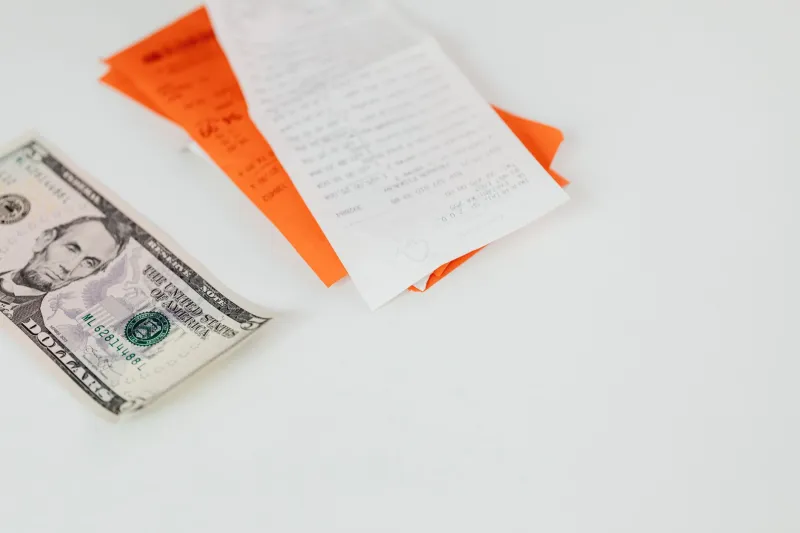
You bought the blender in November. You know you did. You have a vague memory of the price, the store, the cashier who made a comment about guacamole. What you don't have, six months later when the motor burns out, is any readable evidence that the transaction occurred. The slip of paper in your junk drawer is blank — ghostly white, as if the store itself has decided to forget you.
This is not a personal failing. This is thermal paper, and it has been quietly working against you for decades.
What a Receipt Used to Mean
Go back far enough and a receipt was a serious document. Carbon copy books with duplicate sheets, hand-written by clerks or stamped by mechanical registers, produced records that were built to survive. You could find a receipt from 1974 in an old shoebox and still read every line — the store name, the price, the date, the item description. It was physical evidence of a transaction, and it held up as such.
Even into the 1980s and early 1990s, dot-matrix and impact printers produced receipts with real ink pressed into real paper. They weren't beautiful, but they were durable. Retailers kept duplicates. Customers kept originals. If a dispute arose — over a warranty, a return, an insurance claim — both parties had documentation that time couldn't erase.
For everyday Americans, that mattered. Appliance warranties ran five to ten years. Furniture was purchased with the expectation it might outlast a mortgage. A receipt wasn't a throwaway slip — it was part of the ownership record of something you intended to keep.
The Switch That Changed Everything
Thermal printing technology isn't new. It's been around since the 1960s, originally used in medical and industrial equipment. But as the cost of thermal paper dropped through the late 1980s and 1990s, retailers discovered something appealing: thermal printers required no ink cartridges, no ribbons, no maintenance costs worth mentioning. The paper itself was marginally more expensive than plain stock, but the operational savings were significant at scale.
Chain stores adopted thermal printing fast. By the early 2000s, it had become the default across most of American retail — grocery stores, big-box chains, gas stations, fast food counters. The receipts looked fine at first. Crisp black text on clean white paper. Perfectly readable in the moment.
The problem is the chemistry. Thermal paper works by coating the surface with a heat-reactive layer that darkens when exposed to the printer's heated elements. That same coating reacts to light, heat, and friction over time. Leave a thermal receipt in a warm car for a summer, stuff it in a wallet next to a credit card, or simply let it sit in a drawer for eight months, and the text fades — first to gray, then to nothing.
Studies have found that thermal receipts stored under normal household conditions can become fully illegible within six months to a year. Some fade faster. The ink doesn't smear or wash away. It simply disappears, as if the transaction has been quietly expunged from the record.
What You Actually Lose
For most purchases, this doesn't matter much. You're not going back to dispute a $4 coffee. But the receipt problem compounds in exactly the situations where documentation matters most.
Consider a major appliance — a refrigerator, a washer, a television — purchased with a multi-year manufacturer warranty. The warranty card asks for proof of purchase. The retailer's return policy requires a receipt. Your homeowner's insurance may ask for documentation in the event of a claim. In every one of these scenarios, a faded thermal slip is useless. It proves nothing.
The same applies to business expense tracking. Freelancers, contractors, and small business owners who rely on physical receipts for tax documentation have discovered, sometimes at audit time, that their records have quietly self-destructed. The IRS expects documentation. Thermal paper doesn't cooperate.
Retailers know this. Many have introduced digital receipt options — email confirmations, app-based records — and these do solve the fading problem. But they introduce a different one: your purchase history now lives inside a retailer's ecosystem, tied to your email address or loyalty account, accessible only as long as that relationship exists and the company keeps its servers running.
The Accountability Gap
There's a broader dynamic worth naming here. The shift to thermal receipts happened entirely on the retailer's side of the equation. Stores reduced their operational costs. Consumers absorbed the risk. Nobody asked whether a receipt that disappears in six months was actually fit for purpose as a proof-of-purchase document.
In the era of carbon copies and ink-on-paper records, a receipt was a mutual document. Both parties had something durable. The power was balanced. Today, the retailer has a permanent digital record of your transaction in their system. You have a slip of paper counting down to its own erasure.
If you've ever tried to make a warranty claim without a receipt and been turned away, you've felt this imbalance directly. The store knows you bought it. Their system shows the transaction. But without the physical documentation they issued you — documentation they designed to degrade — you have no recourse.
What a Little Preparation Can Do
The workaround isn't complicated, but it requires doing something retailers no longer remind you to do: photograph your receipt the day you get it. Scan it. Email it to yourself. For anything with a warranty longer than a few months, treat the paper slip as temporary and create a permanent copy immediately.
It's a reasonable adaptation. It's also a small but telling example of how the consumer burden has shifted — quietly, incrementally, without announcement — in the direction of the retailer.
The receipt used to be something a store gave you as a gesture of accountability. A record you both held. These days, it's closer to a courtesy that expires before the product does.