Fever and Forgiveness: When American Workers Could Actually Afford to Be Human
When Being Sick Meant Permission to Heal
In 1975, when Janet called her supervisor at the insurance office to report she had the flu, the conversation lasted thirty seconds. "Feel better, see you when you're well," her boss said, and that was it. No questions about whether she could work from home, no expectations of checking email, no anxiety about falling behind or appearing uncommitted. Being sick was treated as a temporary human condition that required rest, not a personal failing that demanded continued productivity.
This wasn't exceptional generosity—it was standard American workplace culture. Across the country, workers understood that sick leave was genuine leave. The concept was simple: when you're ill, your job is to recover, not to maintain your professional responsibilities while battling a fever.
The Golden Age of Guilt-Free Recovery
The mid-20th century workplace operated on fundamentally different assumptions about human needs and worker loyalty. Most full-time employees received paid sick leave as a standard benefit, not a negotiated luxury. The typical arrangement provided 5-10 days annually, and using them was considered responsible behavior rather than a sign of weakness.
Union contracts had established clear boundaries around sick leave that protected workers from retaliation or pressure to work while ill. The 1960s saw some of the strongest worker protections in American history, with collective bargaining agreements that treated sick leave as a fundamental right rather than employer generosity.
More importantly, workplace culture supported the actual use of these benefits. Managers understood that pushing sick employees to work was counterproductive—it spread illness through the office, prolonged recovery times, and ultimately hurt productivity more than temporary absence. The prevailing wisdom held that a few days of proper rest prevented weeks of reduced performance.
Companies also operated with different staffing philosophies. Most departments maintained enough redundancy to handle temporary absences without crisis. Cross-training was common, and colleagues routinely covered for sick coworkers without resentment. The expectation was that everyone would occasionally need time to recover, and supporting each other through illness was part of professional responsibility.
The Technology That Changed Everything
The erosion of genuine sick leave didn't happen overnight—it accompanied the technological revolution that made constant connectivity possible. Email, laptops, smartphones, and remote access gradually eliminated the physical barriers that once made "sick leave" truly separate from work responsibilities.
What seemed like flexibility initially became expectation. The ability to check email from home transformed into the assumption that workers would remain partially productive even while recovering from illness. The laptop that allowed occasional work from bed became the anchor that kept sick employees tethered to their responsibilities.
This shift coincided with broader changes in American labor relations. Union membership declined from over 35% of the workforce in the 1950s to less than 11% today, weakening the collective bargaining power that had secured strong sick leave protections. The rise of "at-will" employment meant that workers increasingly feared that taking sick leave—even when officially provided—might signal unreliability to employers.
The Gig Economy's Final Blow
The emergence of gig work and contract employment delivered the knockout punch to traditional sick leave. Millions of American workers now operate without any paid time off, sick or otherwise. Uber drivers, freelance consultants, restaurant workers, and retail employees face a brutal choice: work while sick or lose income.
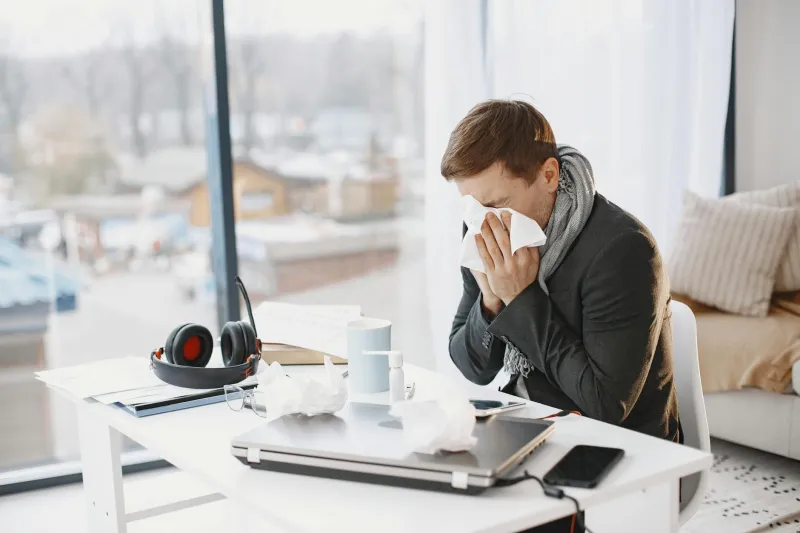
Even workers with traditional employment often find themselves in situations that would have shocked their 1970s counterparts. The modern "sick day" frequently involves working from home at reduced capacity, attending virtual meetings while medicated, or handling "urgent" emails between naps. The boundary between sick leave and work-from-home has blurred beyond recognition.
Consider the psychological pressure that modern workers face when illness strikes. Taking a full day off requires justifying the decision not just to supervisors but to themselves. Will colleagues think they're faking? Will they fall behind on projects? Will their absence be remembered during performance reviews? These anxieties were largely absent when sick leave was culturally accepted as necessary recovery time.
The Productivity Paradox
Ironically, America's obsession with maintaining productivity during illness has likely made workers less productive overall. Research consistently shows that employees who work while sick take longer to recover, perform at reduced capacity, and spread illness to colleagues—creating a cascade of reduced productivity that far exceeds the cost of proper sick leave.
The "presenteeism" epidemic—showing up to work while sick—costs American businesses an estimated $150 billion annually in lost productivity. This figure dwarfs the cost of providing adequate paid sick leave, yet many employers continue to create cultures that discourage taking time off for illness.
Modern workers also report higher levels of stress and burnout, partly because they never receive complete breaks from work responsibilities. The psychological pressure of remaining "available" even during illness prevents the mental rest that's crucial for recovery and long-term job satisfaction.
What We Lost When Sick Became Shameful
The transformation of sick leave from accepted necessity to professional liability represents more than a change in workplace policy—it reflects a fundamental shift in how America views the relationship between human needs and economic productivity. When being sick became something to manage rather than recover from, we lost the recognition that workers are human beings first and productive units second.
This change has particularly harsh impacts on vulnerable populations. Low-income workers, who are most likely to lack paid sick leave, often can't afford to take unpaid time off for illness. Parents face impossible choices between recovering from illness and caring for sick children. Older workers and those with chronic conditions find themselves pressured to maintain productivity despite health challenges that would have been accommodated with understanding in previous generations.
The ripple effects extend beyond individual workers to entire families and communities. When parents can't take sick leave, they send sick children to school, spreading illness through classrooms. When workers come to the office while contagious, they create cycles of illness that affect entire workplaces and communities.
The Human Cost of Always-On Culture
Today's American workers face expectations that would have seemed dystopian to their predecessors: be constantly available, maintain productivity regardless of physical condition, and treat human limitations as personal problems to solve rather than natural realities to accommodate.
The technology that was supposed to give us flexibility instead created invisible chains that bind workers to their responsibilities even during the most basic human experiences like illness. We've optimized for short-term productivity at the expense of long-term human flourishing, creating a work culture that treats recovery as a luxury rather than a necessity.
When American workers lost the right to be genuinely sick—to rest, recover, and return to work refreshed—they lost something essential to human dignity: the recognition that sometimes, being human means needing time to heal.