The Voice of God
Every weeknight at exactly 6:30 PM Eastern, something remarkable happened across America. In living rooms from Maine to California, families stopped what they were doing and turned their attention to a single television screen. For the next thirty minutes, they would hear the same stories, delivered by the same authoritative voice, creating a shared understanding of what mattered in the world.
Walter Cronkite didn't just read the news—he was the news. When he declared the Vietnam War unwinnable in 1968, President Johnson reportedly said, "If I've lost Cronkite, I've lost Middle America." When he removed his glasses and announced President Kennedy's death, the nation grieved together. When he counted down to Apollo 11's moon landing, America held its collective breath.
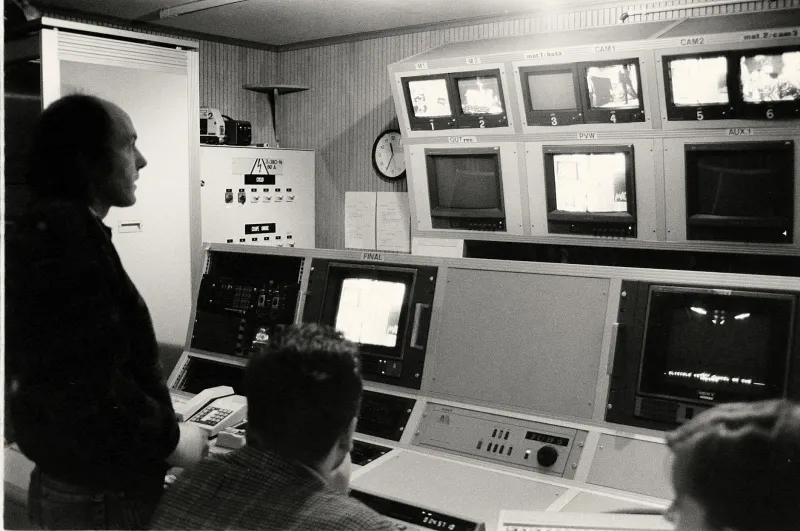
 Photo: Walter Cronkite, via www.glorium.de
Today, asking what "America thinks" about any news event is almost meaningless. We no longer have a shared source of information, let alone a shared interpretation of what that information means.
The Monopoly of Truth
From the 1960s through the 1980s, three television networks dominated American news consumption. CBS Evening News with Walter Cronkite, NBC Nightly News, and ABC World News Tonight reached a combined audience of over 50 million viewers each night. That represented nearly 80% of American households watching one of just three news programs.
This wasn't by choice—it was by necessity. Cable television was still emerging, the internet didn't exist, and newspapers were primarily local affairs. If you wanted to know what happened in the world that day, you had exactly three options, and they all told essentially the same story.
The result was an unprecedented level of shared national awareness. Americans might disagree about politics, but they generally agreed on basic facts about what was happening. They had seen the same footage, heard the same expert interviews, and received the same context for understanding events.
The Ritual of Information
Watching the evening news was more than information consumption—it was a national ritual. Families planned dinner around the broadcast. Conversations paused when the familiar music began. The anchor's voice became as familiar as a family member's, a trusted guide through an often chaotic world.
This ritualistic aspect created something psychologically important: a sense of shared experience. When Cronkite reported on the Watergate hearings, millions of Americans were learning about constitutional crisis together. When Tom Brokaw covered the Challenger disaster, the nation processed tragedy simultaneously.
The evening news provided not just information, but a framework for understanding that information. Anchors like Cronkite, Brokaw, and Peter Jennings weren't just reporters—they were interpreters, helping Americans make sense of complex events through the lens of shared values and common understanding.
The Fracturing Begins
The first crack in this information monopoly came with CNN's launch in 1980. Suddenly, news wasn't confined to a thirty-minute evening broadcast. The Gulf War in 1991 demonstrated the power of 24-hour coverage, as Americans watched events unfold in real time rather than waiting for the evening summary.
But CNN initially maintained the same basic model: professional journalists presenting verified information to a mass audience. The real fracturing began with the rise of cable news opinion shows in the 1990s and accelerated dramatically with the internet age.
Today's media landscape offers infinite choices, each tailored to specific worldviews, political affiliations, and personal preferences. Americans can choose news sources that confirm their existing beliefs and avoid information that challenges their perspectives.
The Algorithm-Driven Reality
Social media has taken information fragmentation to its logical extreme. Facebook, Twitter, and YouTube don't just offer different news sources—they create entirely different information ecosystems for each user. Algorithm-driven feeds ensure that no two people see the same mix of stories, commentary, and analysis.
This personalization means that Americans are no longer just choosing different interpretations of the same facts—they're often operating from completely different sets of facts. One person's timeline might focus on economic indicators and policy debates, while another's emphasizes cultural conflicts and conspiracy theories.
The result is a country where citizens can't even agree on basic factual premises, let alone solutions to shared problems. Where Walter Cronkite once provided a common starting point for national conversations, today's Americans often can't find any starting point at all.
The Trust Factor
Central to the old system was the concept of institutional trust. Americans trusted CBS, NBC, and ABC not because they were perfect, but because they followed professional standards, employed experienced journalists, and faced consequences for getting things wrong.
Anchors like Cronkite built their reputations over decades. They understood that their credibility was their most valuable asset and protected it accordingly. When they made mistakes—and they did—they issued corrections and maintained transparency about their sources and methods.
Today's information environment operates on a fundamentally different trust model. Instead of trusting institutions, Americans increasingly trust sources that confirm their existing beliefs or align with their political tribes. Credibility is often measured not by accuracy or professional standards, but by loyalty to particular worldviews.
What We Gained
The democratization of information has created genuine benefits. Voices that were excluded from mainstream media now have platforms. Stories that major networks might have ignored can find audiences. Citizens can access primary sources, expert analysis, and diverse perspectives in ways that were impossible in the broadcast era.
The speed of modern information flow allows for real-time awareness of events as they unfold. Social media can mobilize communities, expose injustices, and hold powerful institutions accountable in ways that the old media gatekeepers never could.
Minority viewpoints and marginalized communities that were rarely represented in network news now have the ability to tell their own stories and reach national audiences.
What We Lost
But the benefits came with profound costs. The shared foundation of facts that enabled democratic debate has crumbled. Americans can no longer assume that their neighbors are working from the same basic understanding of reality.
The loss of common information sources has contributed to political polarization, social fragmentation, and the erosion of civic cohesion. When people can't agree on what's true, they can't engage in productive disagreement about what to do.
Perhaps most importantly, we lost the sense of being part of a single national conversation. The evening news created a feeling that Americans were all facing the same challenges together, even when they disagreed about solutions.
The Impossible Return
There's no going back to the era of three networks and shared truth. The technological and cultural changes that fragmented American media are irreversible. Even if it were possible, the old system had its own problems—limited perspectives, institutional biases, and barriers to diverse voices.
But understanding what we lost can help us appreciate what we're missing. The next time you see footage of Walter Cronkite announcing the moon landing or covering a presidential election, remember that you're watching more than just news delivery. You're seeing the last era when America could truly say it was listening to the same story, told by the same trusted voice, at the same moment in time.
In our age of infinite information and zero shared truth, that kind of collective experience feels almost impossible to imagine—and perhaps impossible to recreate.