The Love Letter That Took Three Days: How American Romance Survived on Patience and Paper
When Hearts Beat to the Rhythm of the Postal Service
Picture this: You've met someone special at a college mixer in 1978. There's no way to reach them except through a carefully crafted letter, written by hand, sealed with anticipation, and delivered three days later. The wait isn't torture—it's part of the romance.
 Photo: postal service, via c8.alamy.com
For most of American history, meaningful communication moved at the speed of horses, trains, and mail trucks. A single letter carried the emotional weight of dozens of today's text exchanges. Every word was chosen deliberately because there was no backspace key, no delete button, and no chance to clarify a misunderstanding within seconds.
The Daily Pilgrimage to the Mailbox
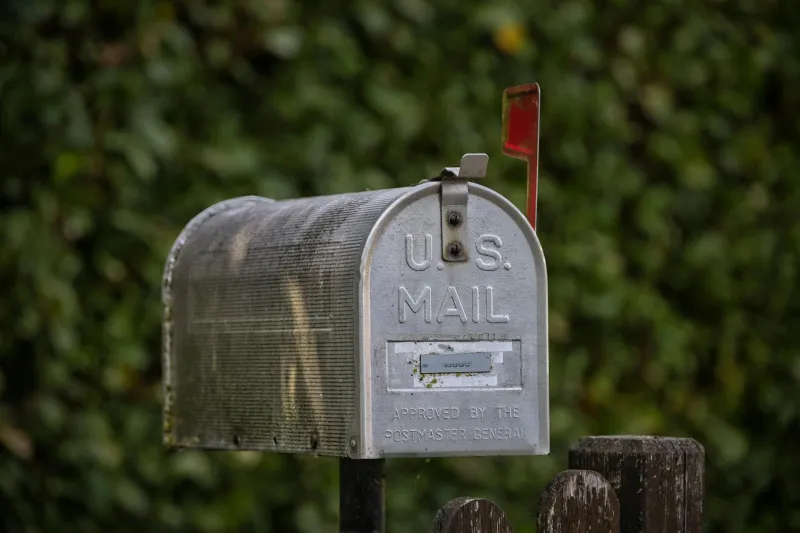
Before email inboxes, Americans made daily pilgrimages to their actual mailboxes. The walk to the curb or apartment lobby carried genuine anticipation. Would there be a letter from mom? News from a friend who'd moved across the country? A birthday card that someone had remembered to send two weeks early?
The mailbox was America's original notification center, but it operated on a completely different emotional frequency. Instead of the anxiety-inducing ping of constant messages, checking the mail was a moment of hope. The physical act of opening an envelope, unfolding paper, and seeing someone's handwriting created an intimacy that no digital message has ever replicated.
When Distance Made the Heart Grow Fonder
In 1985, maintaining a friendship across state lines required genuine commitment. Without instant messaging, video calls, or social media updates, relationships survived on letters that might take a week to cross the country. Pen pal relationships flourished because the delay between question and answer created space for thoughtful responses.
American military families knew this rhythm especially well. Wives waited weeks for letters from husbands stationed overseas. Children drew pictures that wouldn't reach daddy for a month. The separation was harder, but every piece of mail was treasured in ways that today's instant communication never could be.
The Art of the Handwritten Word
Before keyboards and autocorrect, Americans practiced the lost art of penmanship. A handwritten letter revealed personality in ways that Times New Roman font never could. The careful loops of cursive writing, the pressure of the pen, even the choice of stationery—everything communicated something about the sender.
Birthday cards arrived exactly on time because someone had planned two weeks ahead. Thank-you notes were expected social currency, not optional afterthoughts. The effort required to sit down, find paper and pen, compose thoughts, address an envelope, find a stamp, and walk to a mailbox meant that every piece of mail represented genuine intention.
What We Gained and What We Lost
Today's communication is undeniably more convenient. We can reach anyone, anywhere, anytime. Emergencies are handled instantly. Business moves at light speed. Families separated by geography can video chat daily.
But we've traded depth for speed. The average email is scanned in seconds. Text messages are fired off without thought. We're more connected yet somehow less intimate. The anticipation that once made checking the mail exciting has been replaced by the anxiety of constant notifications.
The Economics of Connection
A first-class stamp in 1980 cost 15 cents—about 50 cents in today's money. For half a dollar, you could send your thoughts anywhere in America. Compare that to today's phone bills, internet costs, and the hidden expenses of staying constantly connected. The old system was cheaper in dollars and perhaps richer in meaning.
Businesses once operated entirely through mail. Orders placed by letter, payments sent by check, correspondence that built relationships over years rather than transactions completed in minutes. The pace was slower, but the connections often ran deeper.
When Silence Had Meaning
In the age of mail, silence didn't create anxiety—it created anticipation. If someone didn't respond to a letter immediately, you assumed they were busy living their life, not that they were angry or ignoring you. The three-day minimum between message and response built patience into American communication.
Contrast that with today's expectation of immediate replies. Read receipts create pressure. The blue checkmark becomes an accusation. We've gained speed but lost the comfortable rhythm of correspondence that once defined American relationships.
The Mailbox That Built Character
Checking the mail taught American children about anticipation, disappointment, and delayed gratification. Birthday money from grandparents arrived in actual envelopes. Acceptance letters from colleges were thick or thin envelopes that determined futures. The mailbox was where dreams arrived or were deferred.
Today's children receive instant notifications but rarely experience the sustained anticipation that built character. The wait for mail taught patience in ways that instant gratification never could.
What the Mailbox Knew About America
The daily mail delivery created a shared national rhythm. Every American neighborhood heard the mail truck at roughly the same time. Every family had their mailbox ritual. The postal service connected rural farms to big cities, linked families across generations, and made every address in America part of a vast communication network.
We've gained incredible technological capabilities, but we've lost something essentially American: the belief that some things are worth waiting for, that anticipation enhances joy, and that the best conversations unfold slowly, one carefully considered letter at a time.
The mailbox still stands at the end of most driveways, but it's become a receptacle for bills and advertisements rather than a portal to meaningful connection. In trading the magic of the mailbox for the efficiency of instant communication, America may have solved the problem of distance while creating a new problem: the challenge of finding depth in a world obsessed with speed.