Grease-Stained Glory: When Every American Dad Was His Own Mechanic
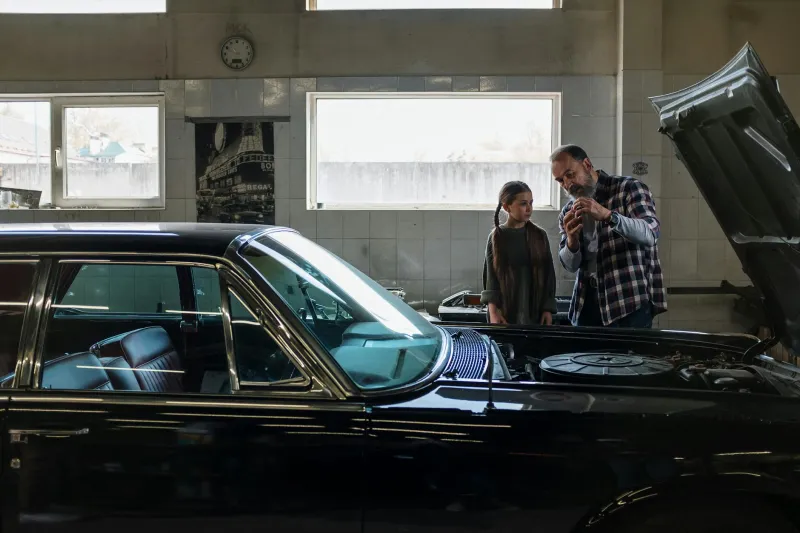
Drive through any American suburb on a Saturday morning in 1975, and you'd witness a ritual as common as lawn mowing: fathers hunched over open car hoods, tools scattered across driveways, kids learning the difference between a wrench and a socket. The family mechanic wasn't a professional—he was Dad, and fixing the car was just part of being a man in America.
The Engine You Could Actually See
Back then, opening a car hood revealed something beautiful in its simplicity: an engine with visible, identifiable parts. The carburetor sat right there on top, connected to an air filter you could change with your bare hands. Spark plugs were accessible with a basic socket wrench. The radiator, alternator, and battery were clearly visible, not buried beneath layers of plastic covers and electronic components.
"You could see daylight through the engine compartment," recalls Jim Martinez, a retired Ford assembly worker from Detroit. "Everything had a purpose you could understand. If something broke, you could usually figure out what it was just by looking."
Contrast that with today's engine bay, where computers control everything from fuel injection to transmission shifts. Modern cars are marvels of efficiency and reliability, but they've become black boxes that require specialized diagnostic equipment just to identify problems. That check engine light? It could mean anything from a loose gas cap to a failing catalytic converter—and you'll need a $200 computer scan to find out which.
The Saturday Afternoon University
For millions of American fathers, the driveway was a classroom. Oil changes happened every 3,000 miles, and Dad did them himself—not because he had to, but because it made sense. A basic tune-up involved replacing spark plugs, points, and condenser, jobs that took an afternoon and cost maybe $20 in parts.
Children learned by watching. They held flashlights, fetched tools, and absorbed lessons about how things worked. "My dad taught me that if you understood your car, you understood responsibility," says Maria Rodriguez, whose father maintained the family's 1968 Chevy Nova for over two decades. "He'd say, 'This machine takes care of us, so we take care of it.'"
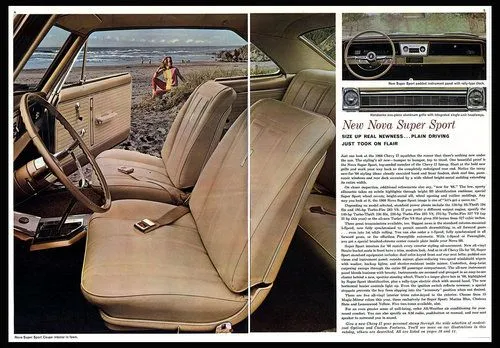 Photo: Chevy Nova, via i.pinimg.com
Those weekend repair sessions built more than mechanical knowledge—they created confidence. When something broke, your first instinct wasn't to call for help or schedule an appointment. You grabbed your tools and figured it out.
The Death of Mechanical Democracy
Somewhere between the 1980s and today, cars became computers on wheels. Electronic fuel injection replaced carburetors. Computer-controlled transmissions eliminated manual adjustments. Anti-lock braking systems, airbag sensors, and emission control computers transformed vehicles into networks of interconnected systems that communicate in languages only certified technicians can speak.
This evolution brought undeniable benefits. Modern cars start reliably, run cleaner, and require far less maintenance. A 2023 Honda Accord might go 10,000 miles between oil changes and 100,000 miles before needing major service. But this reliability came at the cost of accessibility.
Today's average car repair bill runs $500-$1,200, and that's for routine work. Diagnostic fees alone can cost $150 just to identify a problem. What once required a $15 part and an afternoon now demands specialized tools, software updates, and technician certification.
The Cultural Casualties
The shift from backyard mechanics to dealership dependency represents more than just technological progress—it's a fundamental change in how Americans relate to their possessions. The pride of keeping an old car running through ingenuity and elbow grease has been replaced by extended warranties and service contracts.
"We've gained convenience but lost competence," observes automotive historian David Weber. "When you can't fix something yourself, you lose a piece of independence. You become a consumer instead of an owner."
The economic impact extends beyond individual families. When Dad could handle basic maintenance, car ownership was cheaper. A family might keep the same vehicle for 15-20 years, nursing it through minor problems with weekend repairs. Today's complex systems often make major repairs cost-prohibitive, pushing families toward newer, more expensive vehicles.
The Vanishing Wisdom
Perhaps most significantly, we've lost the transfer of practical knowledge between generations. The father teaching his daughter to change brake pads, the grandfather showing his grandson how to gap spark plugs—these moments created bonds while building skills.
Modern parents can teach their children to code, but they can't show them how their car works because they don't know themselves. The family garage has become storage space instead of workspace.
What We Traded Away
Today's vehicles are safer, more efficient, and more reliable than anything previous generations could imagine. They start every time, run for hundreds of thousands of miles, and protect occupants in ways that 1970s cars never could. But in gaining this technological sophistication, we surrendered something quintessentially American: the belief that with enough determination and the right tools, any problem could be solved in your own driveway.
The grease-stained glory of Saturday afternoon repairs may be gone forever, but its memory reminds us of a time when fixing things yourself wasn't just possible—it was part of being an American.