The Flour-Dusted Kitchen Revolution: When American Celebrations Required Actual Labor
The 6 AM Birthday Tradition
In 1975, if your kid's birthday fell on a Wednesday, you weren't calling a bakery or ordering a themed cake online. You were setting your alarm for 6 AM to start the three-layer chocolate cake that would take most of the day to complete.
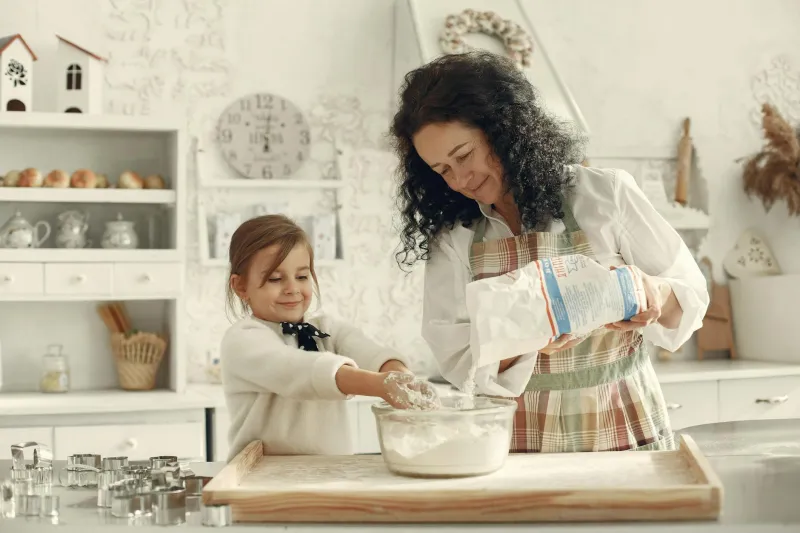
American mothers (and it was almost always mothers) approached birthday cake baking like a sacred ritual. The Duncan Hines box mix came out, along with the electric mixer that sounded like a small aircraft taking off. Measuring cups lined the counter like surgical instruments. The kitchen would soon be transformed into a flour-dusted battlefield where love was measured in perfectly leveled cups and precisely timed oven intervals.
The process wasn't efficient, and it certainly wasn't Instagram-worthy. Layers sometimes came out lopsided. Frosting occasionally refused to cooperate. Food coloring turned fingers blue for days. But every imperfection was a story, every crooked letter piped in frosting was evidence of genuine effort.
The Neighborhood Potluck Economy
Before catering companies colonized American celebrations, neighborhoods operated on an informal potluck economy that would seem impossible today. When the Johnsons threw their annual Fourth of July barbecue, Mrs. Peterson brought her famous potato salad, the Garcias contributed homemade tamales, and the Andersons showed up with a cooler full of their signature coleslaw.
Nobody coordinated through group texts or shared Google docs. The system ran on casual conversations over backyard fences and quick phone calls. "What should I bring?" was the standard question, and the answer was always something made from scratch in your own kitchen.
These gatherings weren't about showcasing culinary perfection—they were about contributing something personal to a shared celebration. Mrs. Chen's wonky spring rolls and Mr. Rodriguez's slightly burned cornbread were welcomed with the same enthusiasm as Mrs. Williams' picture-perfect apple pie. The goal wasn't uniformity; it was community.
The Hand-Decorated Holiday House
Walk through any American suburb in December 1980, and you'd see Christmas decorations that told stories about the families inside. Handmade ornaments crafted during November evenings around the kitchen table. Construction paper snowflakes cut by kids with safety scissors. Strings of lights carefully untangled from last year's storage box and tested bulb by bulb.
Fathers spent weekend afternoons on ladders, wrestling with extension cords and trying to figure out why half the strand wasn't working. Mothers supervised children armed with glue sticks and glitter, creating ornaments that would be treasured for decades despite their obvious imperfections. The house might not look like it belonged in Better Homes & Gardens, but it looked like it belonged to your family.
Contrast that with today's professional holiday decorating services, perfectly coordinated color schemes ordered online, and LED displays programmed to sync with music. Modern Christmas decorating has become an exercise in aesthetic perfection rather than family collaboration.
The Birthday Party That Cost Fifteen Dollars
A child's birthday party in 1978 happened in your own backyard or living room, cost about fifteen dollars total, and somehow managed to create memories that lasted lifetimes. The entertainment was a game of Pin the Tail on the Donkey, musical chairs played with records from your own collection, and maybe a treasure hunt with handwritten clues.
Mothers spent days before the party cutting out paper decorations, making party hats from construction paper and staples, and preparing party favors that consisted of penny candy stuffed into brown paper bags. The birthday child helped blow up balloons until they were dizzy, and everyone understood that the slightly deflated balloon animals were part of the charm.
The cake was always homemade, the ice cream came in those rectangular cartons from the grocery store, and the biggest expense was usually the film for the camera. Nobody hired entertainers, rented bounce houses, or worried about creating content for social media. The goal was simple: help a kid feel special for one afternoon.
The Lost Art of Holiday Preparation
Thanksgiving 1982 began weeks in advance with menu planning that involved actual cookbooks, handwritten grocery lists, and strategic coordination of oven space. Grandma's stuffing recipe existed only in her head and had to be learned through careful observation. The cranberry sauce came from actual cranberries, not a can-shaped cylinder.
Women (and again, it was predominantly women) approached holiday cooking like military campaign planners. They calculated cooking times, coordinated side dishes, and somehow managed to get everything on the table at the same temperature. The kitchen became a command center where multiple generations worked together, sharing techniques passed down through families.
The preparation was exhausting, the cleanup was substantial, and the stress was real. But the process itself was the point. Holidays weren't just about the final meal—they were about the shared labor that brought families together in pursuit of a common goal.
What Modern Convenience Really Cost Us
Today's celebration industry promises to eliminate the stress and mess of homemade holidays. Order the perfect cake online, hire a party planner, book a venue, outsource the decorating. The results are undeniably more polished, more coordinated, and more photogenic than anything our grandmothers produced.
But somewhere in our quest for effortless perfection, we lost the understanding that the effort itself was part of what made celebrations meaningful. The flour on your mother's apron, the slightly lopsided cake, the construction paper decorations—these weren't flaws to be eliminated. They were evidence of love made visible through labor.
Modern celebrations often feel like performances rather than genuine expressions of affection. We've optimized the aesthetics while accidentally engineering out the heart. The Instagram-worthy party might look perfect in photos, but it lacks the particular warmth that comes from knowing someone spent hours of their own time making something special just for you.
The handmade era wasn't perfect. It was time-consuming, exhausting, and often frustrating. But it was also deeply personal, genuinely collaborative, and rooted in the understanding that the most meaningful gifts aren't purchased—they're created through the generous investment of time, effort, and attention.
In our rush to make celebrations easier, we might have accidentally made them emptier. The flour-dusted kitchen revolution wasn't just about baking cakes—it was about baking memories, one imperfect celebration at a time.