Blurry at the Edges, Perfect in the Middle: When a Bad Photo Was Still Worth Keeping
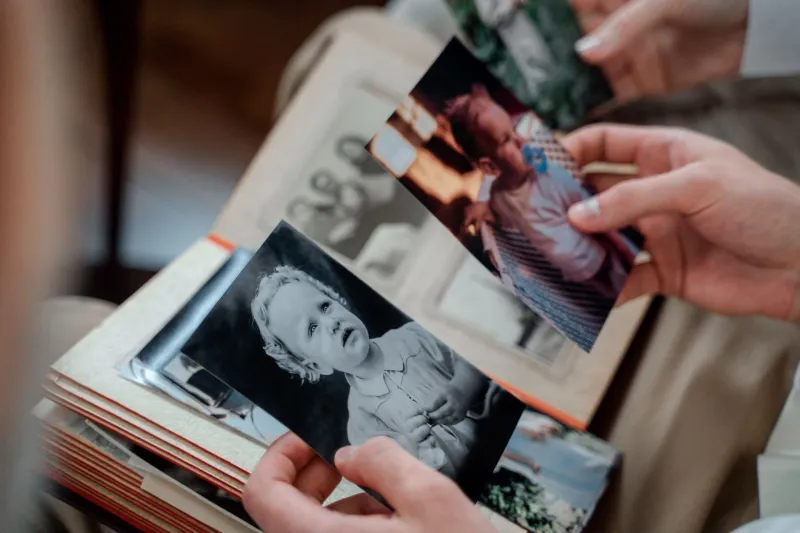
There's a photograph in a lot of American family albums from the 1980s that tells a story all by itself. Someone's standing in front of a birthday cake, mid-laugh, eyes half-closed, slightly blurry because the camera moved at the wrong moment. The lighting is off. The composition is terrible. And every single person who looks at it knows exactly who that is, exactly where that was, and exactly why it mattered.
That photo survived because it had to. There was no delete button. There was no retake. You had twenty-four exposures on a roll of film, you weren't going to waste one on a reshoot, and when the prints came back from the drugstore two weeks later, what you got was what you got. You tucked it into the album anyway, because imperfect documentation was still documentation.
That relationship with images — accepting, permanent, unselfconscious — is almost unrecognizable today.
The Roll of Film and the Economy of Moments
Analog photography imposed limits that shaped behavior in ways people rarely think about now. A standard roll of 35mm film held 24 or 36 exposures. Each shot cost something — the film itself, plus the development fee, typically running several dollars per roll by the 1980s. If you were shooting a vacation, you thought about what was worth photographing. You didn't document every meal. You didn't take seventeen versions of the same sunset. You picked your moments.
This constraint created a different kind of photographer, even among total amateurs. You composed a little more carefully. You made sure people were ready. You waited for the moment rather than machine-gunning a hundred shots and picking the best one later. And when the prints came back — days or weeks after the event — there was a small ritual of discovery. You genuinely didn't know exactly what you'd captured until you held it in your hands.
The delay mattered more than people give it credit for. Memory had already been doing its work by the time the photos arrived. The images became companions to the memory rather than replacements for it. You remembered the trip. The photos reminded you of specific moments within it. The two things coexisted.
The Class Photo Nobody Questioned
Consider the school class photo — a uniquely American institution that played out in gymnasiums and on front lawns across the country every fall for decades. The photographer came, arranged sixty kids on bleachers, took two or three shots, and that was it. The resulting print went home in a cardboard folder, got trimmed and handed out to grandparents, and ended up in frames on refrigerators and desks across town.
Somebody always had their eyes closed. Somebody was always making a face in the back row. The kid in the front always looked slightly panicked. And nobody retook it. It was printed, distributed, and made permanent. Those imperfections became part of the record. In some ways, they made the record more honest — more accurately reflecting the chaos of being twelve years old in a gymnasium in October.
Today, many schools offer retake days as standard policy. Photo editing tools smooth skin, adjust lighting, and can even open closed eyes digitally. Parents request changes. The goal has shifted from capturing the moment to producing a presentable image. The photo is no longer a document. It's a product.
The Filter Was Always There — It Was Just Inside Your Head
It's tempting to say that modern photo editing and filtering are entirely new behaviors, but that's not quite right. People have always been selective about the images they shared. You chose which prints made it into the album and which ones stayed in the envelope. Unflattering shots got quietly buried.
But there's a meaningful difference between passive selection and active reconstruction. Choosing not to display a bad photo is different from altering the photo before anyone sees it. The first is curation. The second is revision. And the modern default — filter, crop, adjust, retouch, post — has made revision the standard rather than the exception.
This has consequences that go beyond vanity. When every image of yourself is a best-case version, you start to lose the baseline. The natural, unlit, slightly tired version of your face starts to feel wrong rather than normal. Researchers studying social media use have consistently found correlations between heavy filtering behavior and reduced body satisfaction, particularly among younger users. The gap between the curated image and the mirror becomes a source of discomfort rather than just a difference in lighting.
Memory Versus the Archive
Here's something worth considering: we take more photographs than at any point in human history, and there's a reasonable argument that we remember less. The smartphone has made documentation effortless, but that ease may be working against the deeper processing that turns experience into memory.
Psychologists call this the photo-taking impairment effect — the documented finding that people who photograph objects or experiences remember them less well than people who observe without a camera. The act of outsourcing memory to a device may actually reduce the brain's engagement with the moment itself.
The person with a 35mm camera and twenty-four exposures to last a whole vacation was forced to be present in a way that the person filming everything on a smartphone is not. The constraint created attention. The attention created memory. The memory gave the photograph meaning when it finally arrived.
What the Shoebox Knew
There's a reason those old shoeboxes full of slightly faded, poorly composed prints feel like such powerful objects when you come across them. They're not curated. They're not filtered. They're not selected for a highlight reel. They're just what happened, captured imperfectly, preserved because there was no other option.
The blurry birthday shot, the class photo with the kid making a face, the vacation print where someone's thumb is half over the lens — these images carry something that a thousand carefully edited Instagram posts often don't: the actual texture of a real moment, unimproved and unashamed.
We got better at taking pictures. It's worth asking, now and then, whether we got better at remembering.