Built to Outlive You: The Era When Americans Expected Their Stuff to Last a Lifetime
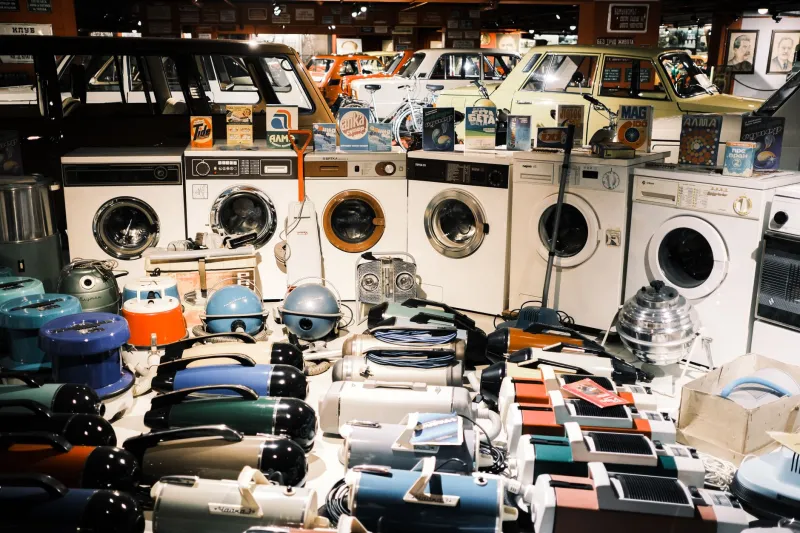
Somewhere in a garage in Ohio, there's probably a 1967 Maytag washing machine still running. Not restored. Not novelty. Just running — because that's what it was built to do.
That kind of durability used to be the baseline expectation, not a happy accident. Americans once bought appliances, clothing, and furniture the way they bought houses: with the assumption that the thing would outlast them, or at least outlast their need for it. The warranty card you filled out and mailed back wasn't a formality — it was a contract between you and a manufacturer who actually expected to honor it.
Something fundamental shifted. And most of us didn't notice until we were standing in a big-box store buying our third blender in eight years.
When the Instruction Manual Was a Heirloom
Pull out almost any appliance from the 1950s or 1960s and you'll find something remarkable: a thick, illustrated manual written with the assumption that the owner would be repairing the machine themselves, or at least supervising someone who was. These documents explained how things worked. They included diagrams. They listed replacement part numbers.
Manufacturers assumed ownership meant long-term stewardship. A Sunbeam Mixmaster from 1955 came with carbon brushes you could swap out yourself. A Hoover vacuum had belts and bags designed for the home mechanic. Products were engineered with repairability baked in — not as an afterthought, but as a core feature.
The economics made sense. A family earning a modest wage in 1960 spent a meaningful chunk of income on a major appliance. That investment demanded longevity. And companies competed on exactly that promise. GE, Whirlpool, and Maytag spent decades marketing not just features, but decades of reliable service.
The famous "Maytag repairman" advertising campaign — launched in 1967 — was built entirely on the premise that their machines never broke down. The repairman had nothing to do. That was the joke. And it worked because it reflected something real.
The Slow Arrival of Built-In Obsolescence
The concept of planned obsolescence isn't new. General Motors design chief Harley Earl was engineering annual style changes into cars as far back as the 1920s, encouraging Americans to trade in perfectly functioning vehicles for newer models. But it took decades for that philosophy to fully colonize the rest of consumer goods.
By the 1980s and 1990s, the math began shifting. Manufacturing moved offshore. Labor costs dropped. The price of producing a new unit fell faster than the cost of repairing an old one. Suddenly, it was cheaper to replace than to fix — and companies started engineering their products accordingly.
Seals that couldn't be opened without special tools. Components glued rather than screwed. Software updates that slowed older devices. The industry quietly stopped building things to last and started building things to be replaced on a comfortable schedule.
Fast fashion accelerated the cultural shift. When a shirt from a major retailer costs $12, throwing it away after a season feels rational. When a smartphone costs $999 but the manufacturer stops supporting it after three years, upgrading feels inevitable. The economics of disposability became so normalized that durability started to feel almost suspicious — like something was wrong with the product if you'd had it too long.
What the Numbers Actually Say
The data tells a stark story. A refrigerator purchased in 1970 had an average lifespan of around 20 years. Today's models average closer to 12. Washing machines that once ran for 15 to 20 years now routinely fail within 8 to 10. The Consumer Reports data on appliance reliability has shown a consistent downward trend across categories over the past three decades.
Clothing tells a similar story. The average American bought around 11 pounds of clothing per year in 1930. By 2018, that figure had climbed to roughly 68 pounds annually — most of it destined for landfills within a few years of purchase.
The environmental cost is staggering. Americans discard approximately 9 million tons of furniture annually. E-waste — discarded electronics — now accounts for 70% of the toxic waste in U.S. landfills, despite representing only 2% of the total volume. We are, in a very literal sense, burying our disposable economy.
The Right to Repair and the Nostalgia for Fixing Things
There's a quiet rebellion brewing. The Right to Repair movement has gained serious traction in recent years, pushing state legislatures and the federal government to require manufacturers to provide consumers and independent repair shops with the tools, parts, and documentation needed to fix products. Minnesota passed a digital right-to-repair law in 2023. More states are following.
Farmers were among the loudest early voices — John Deere had effectively locked them out of their own tractors through proprietary software, forcing them to pay dealer rates for repairs that used to happen in the barn. That outrage spread to electronics, appliances, and beyond.
Vintage appliance repair shops are seeing renewed interest. YouTube channels dedicated to fixing rather than replacing things have built massive audiences. There's something deeply satisfying, it turns out, about making a broken thing work again — a satisfaction that no new purchase can quite replicate.
The Real Cost of Cheap
Here's the uncomfortable math that the disposable economy rarely shows you: buying a cheap appliance every eight years often costs more over a lifetime than buying a quality one that lasts twenty. The same logic applies to boots, cookware, furniture, and a dozen other categories where durability commands a higher upfront price.
But the market has made it genuinely difficult to choose durability even when you want to. Finding a washing machine built to 1970s standards is nearly impossible at any price. The supply chain for durable goods has largely evaporated, replaced by a global system optimized for volume and speed, not longevity.
The warranty card you used to keep in a kitchen drawer — the one that promised five years of parts and labor — has been replaced by extended warranty upsells at the register, offered by third-party companies betting you'll forget to use them.
Something real was lost when Americans stopped believing that the things they owned were worth maintaining. Not just economically, and not just environmentally — but in the quieter sense that caring for your possessions was once a form of self-respect. The Maytag repairman didn't just have nothing to do. He represented a promise that the company was proud to keep.
We stopped asking for that promise. And manufacturers were happy to stop making it.