Cheaper Gas, Pricier Diplomas: What Five Everyday Prices Reveal About American Life Since 1970
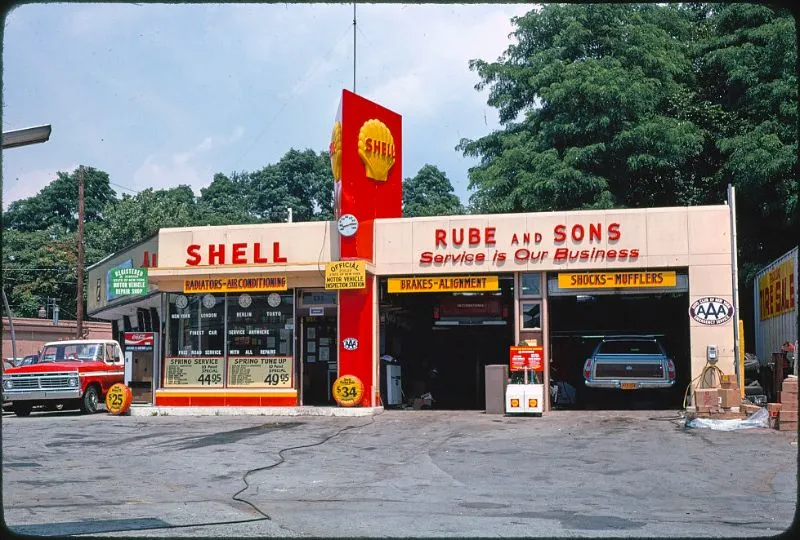
Photo: 1970s gas station price sign vintage American car, via blogger.googleusercontent.com
Prices lie if you let them. A gallon of gas at $3.50 sounds outrageous until you remember that a gallon cost 36 cents in 1970 — which, adjusted for inflation, is roughly $2.90 in today's money. Suddenly $3.50 doesn't look like a crisis. It looks like a modest bump.
This is the trick of inflation adjustment, and it's the only honest way to compare 1970 to now. When you run five everyday staples through that lens, a pattern emerges that explains a great deal about American life: the things we make got cheaper, and the things we need got wildly more expensive.
The New Car: Cheaper Than It Looks
A new car in 1970 cost around $3,900 — about $31,000 in today's dollars. The average new vehicle now runs roughly $48,000, which sounds like a brutal increase. But today's base models come with air conditioning, anti-lock brakes, airbags, backup cameras, Bluetooth, and crash protection that would have seemed like science fiction in 1970.
Adjust for what you get, and cars are arguably a better deal than they've ever been. They also last far longer: a 1970s car hitting 100,000 miles was an achievement; today it's expected.
A Gallon of Gas: The Quiet Non-Story
That 36-cent gallon of 1970? About $2.90 adjusted. Prices have bounced around that line — sometimes above during oil shocks, sometimes below — but the long-run trend is essentially flat. For all the griping at the pump, gasoline is one of the few staples that has not dramatically outpaced wages in real terms.
The Hospital Stay: Where the Numbers Get Ugly
Here's where the pattern breaks. A hospital stay in 1970 averaged around $750 — roughly $6,000 today. A typical hospital stay now can easily run $15,000 to $30,000 or more, and total US healthcare spending per person has grown several times faster than inflation since 1970.
This isn't a story about better care alone. It's a story about an entire system — administrative costs, insurance overhead, drug pricing — compounding faster than almost anything else in the economy.
College Tuition: The Great Escape From Reachability
In 1970, a year at a private university cost around $2,500 — about $20,000 adjusted. Public universities ran a fraction of that, often under $500, or $4,000 in today's terms.
Today, private universities routinely charge $60,000-plus per year, and public flagship schools charge $25,000 or more for out-of-state students. Real tuition has grown at two to three times the rate of inflation for decades. A minimum-wage summer job that once covered a semester's tuition now covers a fraction of the textbook bill.
The House: The Story Everyone Feels
The median American home in 1970 cost about $23,000 — roughly $185,000 adjusted. Today the median sits north of $400,000, and in many metro areas far higher. Even accounting for bigger houses, the real price per square foot has climbed sharply, and the entry point for first-time buyers has moved from difficult to distant.
The Pattern in the Numbers
Lay the five prices side by side and the story writes itself. Cars and gas — goods, made by competitive industries with global supply chains — got cheaper or stayed flat. Healthcare, higher education, and housing — services and assets shielded from competition, often entangled with financing and policy — became dramatically more expensive.
Economists have a name for the sectors where costs keep climbing while productivity stagnates. Everyone else just calls it the reason the budget feels tighter than their parents' did, even with a bigger TV.
The progress since 1970 is real: we drive safer cars for less real money and fill them for nearly the same price in real terms. The squeeze is just as real: the diploma, the hospital room, and the front porch with a yard cost more than ever — and those three things, more than any gadget, define whether the American middle class feels like it's growing or shrinking.