Forty-Five Minutes in the Stacks: How Teenagers Once Taught Themselves Everything the Hard Way
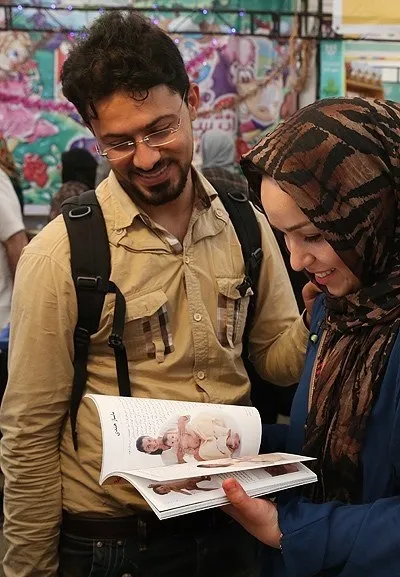
Photo: Hamed Jafarnejad, CC BY 4.0, via Wikimedia Commons
If you were a curious teenager in 1985 and you wanted to know how to build a shortwave radio, learn about the French Resistance, or figure out why your guitar amp kept buzzing, you had one real option: the library. Not as a last resort. As the first and only resort.
You went in, you found the card catalog, and you started digging. Sometimes you found exactly what you needed. More often, you found something adjacent — a book that answered a different question, which led to another question, which led you somewhere you never expected to go. And by the time you walked out an hour later, you knew things you hadn't planned on knowing.
That's not an inefficiency. That's an education.
The Card Catalog Was a Puzzle You Had to Solve
The physical library of the pre-internet era was not a passive resource. It demanded something from you. You had to know how to use the Dewey Decimal System, how to navigate a card catalog, how to read a periodical index, and how to ask a librarian the right kind of question — specific enough to be useful, open enough to allow for discovery.
If your town's branch didn't have the book you needed, you filled out an interlibrary loan request. Then you waited. Sometimes two weeks. Sometimes a month. And when the book finally arrived and the librarian called your house to let you know it was in, you actually went and picked it up — because you'd been thinking about that question for a month and the answer genuinely mattered to you by then.
That waiting period did something to the learning. It gave the question time to deepen. You'd think about it in the meantime, talk about it, form half-theories. By the time the answer arrived, you were ready to absorb it in a way that a thirty-second Google search simply doesn't replicate.
The Serendipity That Algorithms Can't Manufacture
One of the quiet miracles of the old library system was the accidental discovery — the thing you found while looking for something else. You'd pull a book from the shelf, flip through it, and notice the book next to it had an interesting spine. You'd check that one too. An hour later, you'd walk out with three books on subjects you hadn't known you were interested in.
This is what information scientists sometimes call serendipitous discovery, and it's largely absent from modern search behavior. When you type a question into Google, the algorithm narrows your path immediately. It gives you the most popular answer to the most literal interpretation of your query. It's efficient. It's also a funnel.
The library was not a funnel. It was a landscape. You wandered it. You got lost in it. And getting lost was often how you found the most interesting things.
Teenagers who grew up researching this way developed something that's genuinely hard to quantify: a tolerance for not knowing yet, combined with the confidence that the answer was findable if you kept looking. That combination — patience plus persistence — is a form of intellectual self-reliance that instant search has quietly eroded.
Trial, Error, and the Hobby That Took Six Months to Figure Out
Beyond formal research, the pre-internet era forced young people to learn practical skills through a particularly demanding method: trial and error with limited guidance.
If you wanted to learn darkroom photography, you found one book on the subject, read it cover to cover, made every mistake it warned you about, and then found another book. If you wanted to get into ham radio, you tracked down other operators through local clubs, asked questions, and learned from people who'd been doing it for decades. If you wanted to learn to cook something complicated, you called your grandmother.
None of these paths were quick. All of them required you to develop a relationship with the subject matter over time — to sit with confusion, to try things that didn't work, and to build understanding layer by layer rather than absorbing it in a single listicle.
The result was a different kind of knowing. Not shallower, not deeper necessarily — but more personally constructed. You hadn't just read the answer. You'd lived the process of finding it.
What Instant Answers Actually Cost
This isn't an argument against the internet. Having the sum of human knowledge available in your pocket is, by any reasonable measure, extraordinary. The question is what we've traded for that convenience.
Studies in cognitive science suggest that the ease of retrieval affects how deeply we encode information. When we know an answer is always one search away, we're less motivated to actually retain it — a phenomenon researchers call the Google Effect. We outsource our memory to the machine and trust it'll be there when we need it.
More subtly, the friction of the old research process had a motivational function. When getting information was hard, only people who genuinely wanted to know something went through the trouble of finding it. The effort acted as a filter. What you learned through that process tended to stick, because you'd invested something in it.
Today, information is frictionless. Which means it's also, in a way, weightless.
The Teenager Who Stayed Until Closing
There was a particular kind of kid in every town who became a regular at the library — not because school required it, but because they were genuinely obsessed with something. Astronomy. Civil War history. Vintage motorcycles. Jazz. They'd show up on Saturday mornings and stay until the librarian started turning off lights.
Those kids didn't just learn their subject. They learned how to learn. They developed a methodology — how to cross-reference, how to evaluate sources, how to recognize when a book was outdated, how to find the expert in the footnotes and track down their other work.
That methodology is still valuable. Maybe more valuable now, in an era of information overload, than it ever was before. The difference is that almost nobody builds it the hard way anymore.
The library card didn't just open a door. It taught you how to open doors. And that's a lesson that never really goes out of date.