Pin the Tail, Eat the Cake, Go Home: The Birthday Party Before It Became a Production
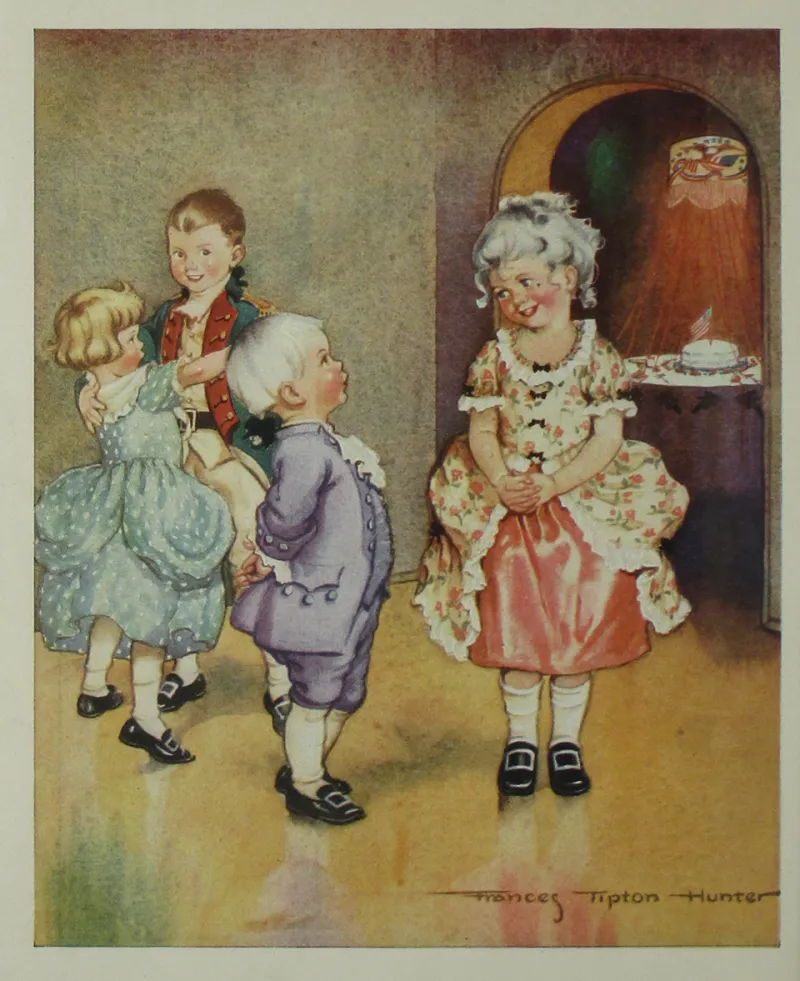
Photo: Frances Tipton Hunter, Public domain, via Wikimedia Commons
Somewhere in a shoebox in millions of American homes, there's a photograph from the 1970s or 80s of a kid standing in front of a homemade birthday cake, paper cone hat slightly crooked, surrounded by friends in regular clothes in someone's backyard. There are streamers. There might be a folding table with a plastic tablecloth. Everyone looks genuinely happy.
Nobody hired a photographer. Nobody rented a venue. Nobody assembled a custom charcuterie board for the parents.
That party probably cost about forty dollars in today's money. The modern equivalent — if you're doing it the way Instagram and parenting culture now implicitly require — can easily run five hundred to two thousand dollars. For a six-year-old.
Something changed. It's worth understanding what, and why.
The Backyard Era: Low Budget, High Attendance
For most of the twentieth century, the American children's birthday party was a neighborhood event, not a consumer event. It happened at home — usually in the backyard in warmer months or the living room in winter. The guest list was whoever lived nearby plus a few kids from school. Invitations were handwritten or, later, printed on cardstock from a grocery store display.
The activities were whatever a parent could organize for free. Pin the tail on the donkey. Musical chairs. A backyard relay race. Maybe a piñata if someone felt ambitious. The cake was baked at home, often from a box, decorated with store-bought frosting and the occasional plastic figurine pulled from a drawer.
Gifts were modest — a board game, a book, a toy that cost ten or fifteen dollars. Nobody expected more. Nobody felt embarrassed to give less.
The party lasted two hours. Kids ran around. Someone cried briefly. Cake was eaten. Parents chatted by the back fence. Everyone went home.
That was it. And somehow — remarkably — children remembered those parties as some of the best days of their lives.
How the Industry Moved In
The shift didn't happen overnight. It crept in gradually through the 1990s and accelerated sharply through the 2000s and 2010s.
First came the venue party. Chuck E. Cheese had been around since the late 70s, but the idea of outsourcing the party to a commercial location gained real traction in the 90s. Bowling alleys, gymnastics centers, and paint-your-own-pottery studios began offering party packages. The appeal was obvious: no cleanup, no setup, built-in entertainment. For busy parents, it felt like a reasonable trade.
Then came the themed party. Not just a color scheme, but a fully realized concept — a specific character, franchise, or aesthetic carried through every element from the invitations to the cake to the plates to the balloon arrangement. Party supply stores expanded their inventory to match. Eventually, Etsy sellers and professional party stylists emerged to serve families who wanted something more curated.
Then came social media. And that changed everything.
Once birthday parties became content — photographable, shareable, likable — they stopped being purely about the child and started being about the presentation. The backdrop matters. The dessert table matters. The favor bags, the balloon arch, the custom banner with the child's name and age in a matching font — all of it now exists partly to be documented and shared. The party became a performance, and performances have production costs.
The Numbers Are Hard to Ignore
The birthday party industry in the United States is now valued at several billion dollars annually. Party planning services, rental bounce houses, character appearance companies, custom cake designers, themed décor suppliers — an entire economic ecosystem has grown up around what used to be an afternoon in the backyard.
According to various consumer surveys, American parents now spend an average of $400 to $700 on a child's birthday party, with a significant portion spending well over $1,000. For families with multiple children, this becomes a recurring annual expense that can rival a car payment.
And because children talk to each other, the expectations escalate. If a classmate had a party at a trampoline park with a custom cake and a goody bag that included a personalized water bottle, the implicit baseline has shifted for every other parent in that social circle. No one wants their child to feel like they got the lesser version.
This is how consumer culture compounds: not through individual extravagance, but through collective anxiety.
What the Homemade Cake Actually Meant
There's a real loss embedded in this shift, and it's not just financial. The homemade birthday party was, among other things, an act of parental presence. The cake took time to make. The games took thought to plan. The decorations were hung with someone's actual hands.
Kids, even young ones, register the difference between a parent who organized something for them and a parent who paid someone else to organize something for them. Both are expressions of love. But they don't feel identical.
There's also something to be said for the simplicity of the old format when it comes to what children actually remember. Research on childhood memory consistently finds that emotional resonance — feeling celebrated, feeling surrounded by people who care — matters far more than the scale or production value of an event. A child who blew out candles on a lopsided homemade cake surrounded by their five best friends may carry that memory more vividly than a child who had a professionally decorated venue party attended by their entire class.
The experience was never really the point. The feeling was.
The Party That Doesn't Need a Planner
Some parents are quietly pushing back. The "simple party" has become its own minor trend in parenting circles — a deliberate return to backyard games, homemade food, and small guest lists. Some families have started treating the party budget as a teaching moment, giving children a fixed amount and letting them decide how to use it.
These aren't radical ideas. They're just old ones.
The birthday party was never supposed to be a financial event. It was supposed to be a celebration — of a kid, a year, a life being lived. The backyard was good enough for that. In most cases, it still is.
The cake doesn't need to be Instagram-worthy. It just needs to have the right number of candles on it.