Saturday Morning Swim Meets and Zero Dollar Entry Fees: How Youth Sports Became a Financial Endurance Test
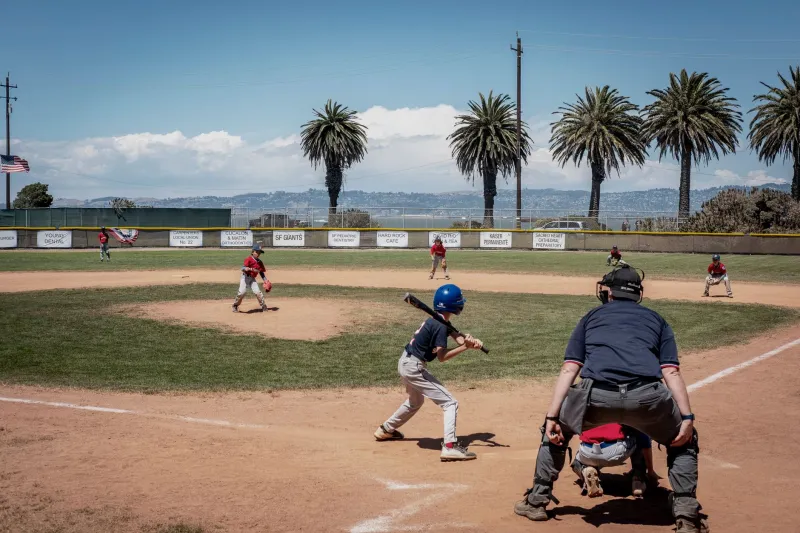
The Little League field behind St. Anthony's Parish in any mid-sized American town used to be the great equalizer. The kid whose dad drove a delivery truck played alongside the kid whose dad was the town dentist. The uniforms were identical. The registration fee was somewhere around fifteen dollars. The only thing that determined whether you played was whether you showed up.
That version of youth sports still exists in fragments, but it has been largely overtaken by something else: a professionalized, stratified, expensive industry that has quietly priced out a significant portion of American children and reclassified athletic participation as a premium experience.
The transformation happened gradually, then suddenly — and most families didn't realize how much had changed until they got the invoice.
What It Used to Look Like
Recreational youth sports in the 1960s, 70s, and into the 80s were primarily organized by community institutions: parks and recreation departments, churches, schools, and volunteer-run leagues. The infrastructure was public or community-owned. The coaches were parents who showed up on weekday evenings because someone had to. Equipment was basic, shared when necessary, and rarely the deciding factor in whether a kid participated.
Swim team registration at the local public pool might cost $20 for a summer. Baseball leagues ran on registration fees and the occasional bake sale. Soccer programs launched across the country in the 1970s and 80s with the explicit goal of giving kids an inexpensive sport that required nothing but a ball and open space.
The emphasis was participation. The philosophy, largely unspoken but broadly shared, was that sports were for kids — all kids — and the value was in the playing, the losing, the learning to be on a team, and the hundred small lessons that came from showing up twice a week regardless of talent level.
College scholarships existed, but chasing one through a child's recreational sports career was not a widespread organizing principle. You played because it was summer and there was nothing else to do and your friends were doing it and it was fun.
The Moment the Market Arrived
The shift began accelerating in the 1990s. Club sports and travel teams — which had existed in limited form for elite athletes — began expanding into mainstream youth athletics. Entrepreneurs saw an opportunity in parents who wanted more competitive environments for their children and were willing to pay for them.
At the same time, school budgets tightened. Many districts began cutting or scaling back athletic programs, creating a vacuum that private clubs and pay-to-play leagues were happy to fill. The funding model shifted from public subsidy to private expenditure, and with that shift came a dramatic change in who could access competitive athletic experience.
By the 2000s, the travel team model had colonized nearly every sport. Baseball, soccer, basketball, swimming, lacrosse, volleyball, gymnastics — each developed a parallel universe of club competition that operated outside school systems, required year-round commitment, and charged accordingly.
The Numbers That Make Parents Wince
The current economics of youth sports are, by any reasonable measure, extraordinary.
A survey by the Aspen Institute's Sports & Society Program found that the average American family spends nearly $1,000 per child per year on youth sports. That's the average — which means the median is dragged upward by families spending $5,000, $10,000, or more annually on a single child's athletic participation.
Travel baseball teams in competitive markets charge $2,500 to $4,000 per season before travel costs. Elite youth soccer clubs in major metros regularly run $3,000 to $6,000 annually, not including tournament fees, equipment, and hotel rooms for weekend tournaments two states away. Private swim clubs with competitive programs can run $2,000 to $3,500 per year. Gymnastics at a competitive level is notoriously among the most expensive, with some families spending $20,000 or more annually on training, coaching, and competition fees.
A 2019 survey by TD Ameritrade found that 37% of parents with children in organized sports said the financial burden was causing stress in their household. Twenty-seven percent said they had gone into debt to cover youth sports expenses.
Who Gets Left Out
The economic sorting that follows from this pricing structure is not subtle. Research consistently shows that youth sports participation has become strongly correlated with household income. Higher-income families participate at dramatically higher rates than lower-income ones — a gap that has widened significantly over the past three decades.
The Aspen Institute's Project Play data shows that children from families earning under $25,000 annually are significantly less likely to participate in organized sports than children from families earning over $75,000. The gap is particularly pronounced in individual sports like tennis, swimming, and gymnastics — sports that have historically produced Olympic athletes and that once had meaningful public infrastructure supporting broad participation.
The public pool where generations of American children learned to swim competitively has, in many communities, been replaced by the private club with a waiting list and a four-figure annual membership. The park district baseball league still exists but competes for players against travel organizations that offer more coaching, better facilities, and the implicit promise of a competitive edge.
For families who can't afford the travel team, the message — unintentional but unmistakable — is that serious athletic participation isn't for them.
The Myth of the Scholarship Pipeline
One of the forces driving the spending is the belief that elite youth sports participation leads to college scholarships. For a small minority of athletes in a handful of sports, this is true. For the overwhelming majority, it is not.
The NCAA reports that fewer than 2% of high school athletes receive any athletic scholarship money, and many of those scholarships are partial, not full rides. The odds of a travel baseball investment paying off in scholarship dollars are, for most families, vanishingly small — a reality that is rarely discussed openly in the culture of competitive youth sports.
The financial logic that drives $4,000 travel team commitments frequently doesn't hold up to scrutiny. But the social pressure, the fear of falling behind, and the genuine love of the sport make clear-eyed calculation difficult in the moment.
What Was Actually Being Built
The most significant thing youth sports used to produce wasn't athletes. It was kids who knew how to deal with losing, how to function as part of a group, how to handle a bad day and come back the next week. Those lessons didn't require a travel schedule or a private pitching coach. They required showing up, playing, and going home.
The fifteen-dollar registration fee wasn't just cheap access to a sport. It was a community decision that the experience of athletic participation belonged to all children, not only those whose parents could afford to invest in it.
That decision has quietly been reversed. And the kids who used to show up at the park on Saturday morning — because it was free and their friends were there and it was the thing to do — are now watching from the sidelines of a market that wasn't built with them in mind.