Stuck in the Waiting Room With Nothing But a Magazine and Your Own Thoughts
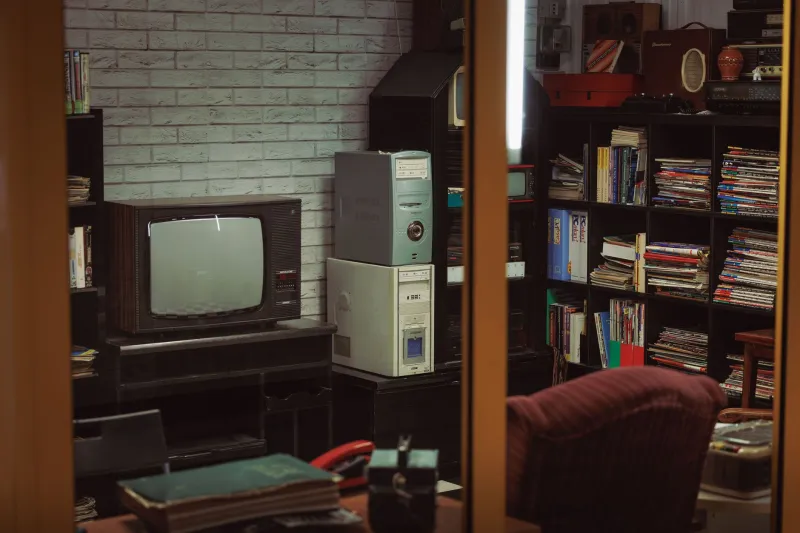
There was a specific kind of boredom that lived inside the waiting room. Not the restless, panicked boredom of today — the kind that sends your hand flying toward your phone before you've even registered you're uncomfortable. This was slower. Heavier. The boredom of a plastic chair, a fish tank, and a stack of magazines that were already three months out of date.
And somehow, it was good for you.
The Magazine Stack Was a Strange Gift
In the 1980s and '90s, waiting — really waiting — was unavoidable. You sat in your dentist's lobby and you read whatever was on the table. Maybe it was a Sports Illustrated from February. Maybe it was a National Geographic with a cover story about Papua New Guinea that you'd normally never touch. It didn't matter. You read it anyway. You read it because the alternative was staring at the fish tank or studying the water stain on the ceiling tile.
That enforced engagement with unfamiliar content was quietly doing something important. You were building focus. Not because you were trying to — because you had no other option.
Reading a magazine article from start to finish requires a kind of sustained attention that feels almost quaint now. You followed a thought across multiple paragraphs. You held context. You let an idea develop before you decided whether you liked it. There was no skipping ahead, no tab-switching, no notification pulling you sideways. Just you and the words.
What the Research Started Telling Us
Cognitive scientists have been quietly ringing alarm bells for the better part of a decade. Studies from institutions including Microsoft and the Technical University of Denmark have found that the average human attention span — the ability to focus on a single task before distraction takes over — has measurably shortened in the era of smartphones and social media.
The reasons aren't mysterious. Every time you pick up your phone to fill a quiet moment, you're training your brain to expect stimulation on demand. You're teaching it that stillness is a problem to be solved rather than a state to be inhabited. And over time, the brain obliges. It gets worse at waiting. It gets worse at reading long things. It gets worse at sitting with an idea long enough to actually absorb it.
The waiting room magazine — ridiculous as it sounds — was doing the opposite. It was training patience. It was rewarding sustained attention with the payoff of actually finishing something.
The Dentist's Office as an Accidental Library
There's something worth noting about the randomness of what you used to read in those waiting rooms. You didn't choose your content. The stack chose for you. One visit you might end up deep in a Time magazine feature about the fall of the Soviet Union. The next, you're halfway through a Better Homes & Gardens piece on container gardening that you never asked to read but somehow find yourself finishing.
That randomness had real value. Algorithms today are extraordinarily good at giving you more of what you already like. But liking something and growing from it aren't the same thing. The waiting room magazine had no algorithm. It just sat there, and you either read it or you didn't.
People who grew up in that era often describe a kind of intellectual cross-pollination — knowing a little about a lot of things, picking up unexpected interests, developing opinions on topics they never sought out. That's what happens when the content isn't curated to your preferences.
Boredom Was Doing Something
The deeper shift isn't just about magazines. It's about what boredom was quietly accomplishing before we declared war on it.
When your mind had nothing to do, it didn't shut down. It wandered. It made unexpected connections. Psychologists call this the default mode network — the part of the brain that activates when you're not focused on a specific task. It's associated with creativity, self-reflection, memory consolidation, and the kind of slow-burn thinking that leads to actual insight.
Every time you fill a waiting moment with a scroll through Instagram or a quick text thread, you're interrupting that process. The brain never gets a chance to wander. It just gets more input.
The person sitting in the 1987 waiting room, staring at the fish tank because they'd already read everything on the table, was actually doing something. They just didn't know it.
We Traded Depth for Convenience
Nobody is saying smartphones are evil or that you should throw your phone in a drawer every time you sit down to wait. But it's worth being honest about what the trade-off has been.
We traded depth for convenience. We traded slow absorption for fast consumption. We traded the accidental discovery of an article we never would have chosen for an endless feed of content that already knows exactly what we want to see.
And somewhere along the way, we stopped being comfortable with doing nothing. Which means we stopped being comfortable with thinking.
The next time you're sitting in a waiting room and the urge to pull out your phone hits you within the first thirty seconds, try resisting it. Pick up whatever magazine is on the table — even if it's six months old, even if the topic doesn't interest you. Read the whole thing.
You might be surprised how good it feels to finish something.