You Bought It, You Owned It: How Streaming Quietly Ended Your Music Collection
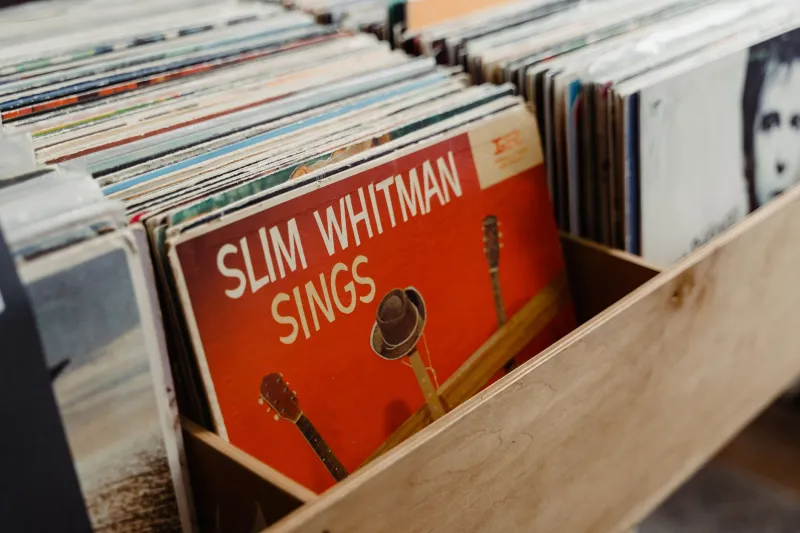
Somewhere in America right now, there's a basement with a milk crate full of vinyl records that nobody has touched in fifteen years. Fleetwood Mac. Marvin Gaye. A worn copy of Born to Run with a coffee ring on the sleeve. That crate represents something most people under thirty have never experienced: the feeling of actually owning your music.
Not renting it. Not accessing it through a monthly subscription that can be cancelled, repriced, or restructured at any time. Owning it. The way you own a chair or a book.
The shift from physical music to streaming didn't happen overnight, but it happened fast enough that most people didn't stop to ask what they were giving up.
The Ritual Nobody Talks About Anymore
Buying a record — or later, a cassette, then a CD — was a deliberate act. You drove to the store. You flipped through the racks. You made a choice with your money, which meant you had skin in the game. When you got home, you sat down and listened. Not as background noise while you scrolled through something else. You listened because you'd invested in the thing.
Vinyl records practically demanded full attention. The format punished distraction — if you wandered off, the needle would reach the end of side one and just spin. You had to come back, flip it over, and re-engage. Albums were sequenced by artists who thought carefully about the order of songs, the pacing of a side, the emotional arc of a complete work. Dark Side of the Moon wasn't meant to be shuffled. Neither was What's Going On or Tapestry or Purple Rain.
There was a social dimension too. You lent records to friends. You borrowed them back. You taped albums for people you liked. Your collection was a physical autobiography — a shelf that told visitors exactly who you were without you saying a word.
When Convenience Rewrote the Rules
Napster cracked the door open in 1999, and by the time iTunes came along in 2003, the idea of paying per song had replaced the idea of paying for an album. That was the first fracture. The album — as a unified artistic statement — started losing its cultural authority almost immediately.
Streaming finished the job. Spotify launched in the US in 2011, and within a decade, physical music sales had collapsed. By 2023, streaming accounted for roughly 84 percent of all music industry revenue in the United States, according to the RIAA. Vinyl made a modest comeback — sales have grown for seventeen consecutive years — but it's a niche revival, not a return to the norm.
The economics shifted in ways that still haven't fully settled. Under the old model, an artist sold you an album for ten or fifteen dollars and that was a transaction with real weight. Under streaming, the same artist earns somewhere between $0.003 and $0.005 per stream on most platforms. To earn the equivalent of one album sale, a song needs to be streamed roughly three thousand times by the same listener. That math doesn't work in most artists' favor.
The Shuffle Problem
Here's the thing about algorithmic playlists: they're genuinely good at keeping you listening. That's not the same as helping you hear something.
When Spotify or Apple Music builds a playlist around your habits, it's optimizing for engagement — for the kind of frictionless listening that keeps you on the platform. What it's not doing is challenging you. It's not playing you the difficult third track that you need to sit with before it reveals itself. It's not asking you to give an album the same focused attention that a musician spent months or years creating.
Research from music psychologists has suggested that passive, shuffle-based listening tends to reduce emotional depth of engagement with music. You hear more, but you experience less. Discovery becomes algorithmic rather than personal — you're not flipping through a bin at a record store based on a cover that caught your eye. You're being served content based on what people like you already clicked on.
The serendipity of old-school music discovery had a texture to it. A friend pressing a record into your hands and saying, just listen to the whole thing, trust me. That moment doesn't really translate to a shared Spotify link.
What You Actually Lose When the Subscription Ends
Here's the part that most people don't think about until it happens: you don't own any of it.
If Spotify raises its prices and you cancel, your music is gone. If a label pulls its catalog from a platform — which happens regularly — albums you've been listening to for years simply disappear from your library overnight. There's no crate in the basement. There's nothing to hand down to your kids. The collection you've built over a decade of listening exists entirely at someone else's discretion.
That's a genuinely different relationship with music than any previous generation had. It's not necessarily worse in every way — the access is extraordinary, the variety is staggering, and the convenience is real. But it is a trade-off that happened so quietly most people never consciously agreed to it.
What the Crate Still Means
There's a reason vinyl sales have kept climbing, especially among younger listeners who never grew up with it. Part of it is audio quality. Part of it is aesthetics. But a meaningful part of it is the desire to own something — to have a relationship with music that isn't mediated by an algorithm and doesn't require a monthly payment to maintain.
The crate in the basement isn't just nostalgia. It's a record of choices made, money spent, time given. It's evidence that music once asked something of you, and you gave it.
Streaming gave us everything, everywhere, instantly. What it quietly took away was the sense that any of it really belonged to you.